
 Phrendylor Xyventhari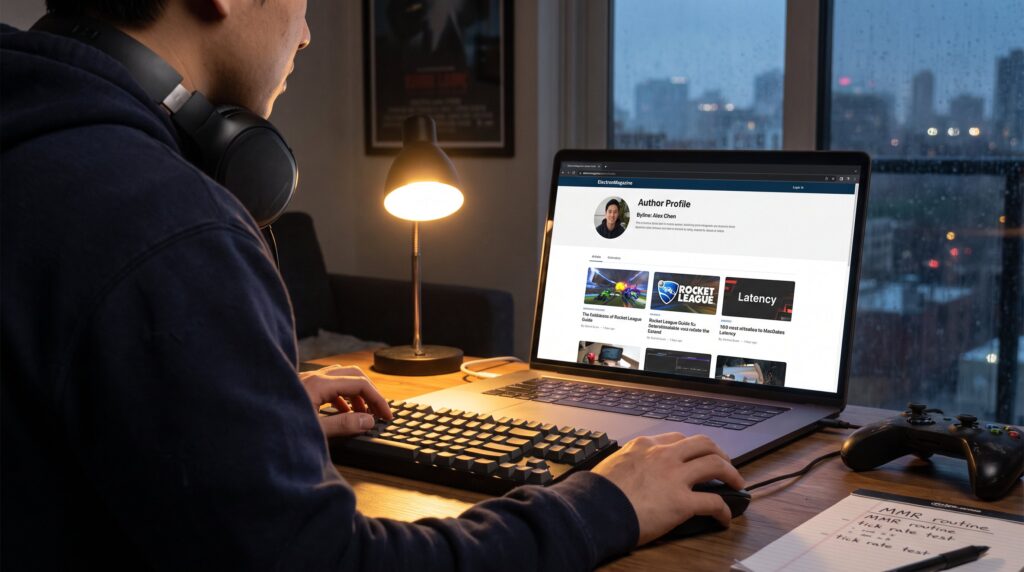
Where To Find ElectronMagazine Author Pages matters when a gamer wants reliable guides and consistent voices. This guide shows exact places to look on electronmagazine’s sites, explains search tactics, and gives practical ways to follow writers who produce Rocket League tips, latency fixes, and ranked-play advice. It sets expectations about which pages include bylines, where author bios live, and how to capture new pieces the moment they publish.
Key Takeaways
- ElectronMagazine author pages are essential for gamers seeking consistent and reliable Rocket League guides and latency tips.
- Clicking an article byline is the quickest way to access an author’s profile, featuring their recent articles and sometimes bios.
- If byline links are missing, use site search or the author directory to find all articles by a specific writer.
- Bookmark author pages or subscribe to their site tags to receive immediate updates on new content and maintain a steady training routine.
- Author pages often link to external social profiles, allowing gamers to follow authors for real-time play clips and patch insights.
- Using combined search terms like author name plus topic tags helps quickly locate relevant articles and reduce search noise.
Why ElectronMagazine Author Pages Matter For Gamers
Author pages provide context and reliability up front. Gamers who follow a single writer on ElectronMagazine reduce mixed advice and keep a steady method for improving play. For example, a player following an author who regularly posts Rocket League MMR and mechanical drills will see consistent terminology, so training drills translate across guides rather than contradicting each other. That consistency matters when a reader applies a 30-minute daily routine for aim or timing.
Author pages also reveal the writer’s focus areas (MMR, input-lag guides, hardware testing). They list recent articles and sometimes link to external social profiles where the author posts play clips or patch breakdowns. When a gamer evaluates a how-to for latency reduction, the author’s other posts will show whether they use lab testing or anecdotal tweaks. That difference changes how to apply the advice in a real setup, PC vs console, wired vs wireless.
Finally, author pages let readers contact or credit the right person when reporting bugs in a guide or requesting deeper tutorials. That direct line shortens feedback loops and improves future content quality.
Quick Ways To Access Author Pages On ElectronMagazine
Clicking an article’s byline is the fastest route. Often a writer’s name appears near the title or at the bottom: that name frequently links to a profile with past articles. If the byline link exists, it surfaces a list of the author’s posts and a short bio.
If a byline isn’t linked, the site search or author directory can help. Enter the exact author name found in the article header into ElectronMagazine’s search box: results normally return all articles that name. When search fails, use the site’s author directory, if present, to scan contributors by role or topic.
When speed matters, for example, tracking an author who posts rapid tournament tips, bookmark the author page or subscribe to the site tag for that writer. Bookmarking keeps their feed a single click away: subscribing to their tag brings updates into an RSS reader or email if the site supports it.
Byline Links On Individual Articles
Start at the byline: fact first, the byline often links to the author profile. Many ElectronMagazine posts show the author’s name beside the publish date: when that name is clickable, it opens a page listing all their work. That page typically includes recent Rocket League guides, input-lag tests, and optimization pieces.
If the link is missing, note the exact spelling of the name and run an internal site search. Gamers who want consistent tactics should verify whether the author’s earlier guides follow the same methods, look for repeated terms like “MMR reset,” “aim routines,” or “tick rate tests.” This immediate check prevents following an author whose methods changed without notice.
Author Directory And Profile Search On The Site
Fact first: ElectronMagazine sometimes maintains an author directory or contributor list. In that directory, authors are grouped by beat, esports, hardware, mobile games, making it faster to find specialists. Use the directory when multiple authors share a similar name: it shows role, recent posts, and contact pointers.
If a directory is absent, the site’s advanced search filters (when available) will filter by author name or tag. For gamers researching a topic, say, input-lag, they can open the directory and click an author who lists that beat, then scan their article history for lab-tested benchmarks versus experiential tips.
Using Site Search, Tags, And Filters To Locate Authors
Search returns and tags are the most reliable fallback. Fact: site search keyed to an author name or tag will surface all tagged articles, even when the byline lacks a link. Tag pages often function like mini-author feeds for topic-specific writing.
Start by typing the exact author name or a prominent tag (e.g., “Rocket League,” “latency”). Filter results by date to find the most recent work. Gamers wanting weekly practice plans should filter for “guides” or “how-to” tags to avoid opinion pieces. Tags also give insight into the author’s depth, if an author appears on both “esports” and “hardware” tags, they cross-test setups and play tactics.
Practical warning: tags are sometimes inconsistent. A useful pattern is to combine author+tag in the search box (for example, the author’s name plus “MMR”) to reduce noise and find targeted pieces faster.
Finding Author Pages With Google, Social Media, And RSS
Outside search engines often index author profiles faster than site search. Fact: searching the author name plus ElectronMagazine on Google will list all indexed pages and, in many cases, the author’s profile. This method exposes connectors like social profiles and syndicated pages.
Authors frequently link their Twitter, YouTube, or Mastodon from their author page. Gamers can follow those social handles for short-form updates (clip breakdowns, patch notes). For systematic tracking, subscribe to the author’s RSS feed or to the site tag feed in an RSS reader.
As a concrete example, external author pages on major outlets show how an author’s biography and article list appear: using similar search terms for ElectronMagazine surfaces equivalent profiles. For verification, gamers may compare an ElectronMagazine author with a profile on a large outlet like GameSpot to confirm style and scope, such as a GameSpot author profile.
How To Follow, Bookmark, And Make The Most Of Author Pages
Actionable fact: bookmark, subscribe, or add to an RSS collection to follow an author reliably. Bookmark the author page so it’s one click from a daily session. Add the author’s tag feed to an RSS reader to receive new guides immediately, this saves time versus searching manually.
Use browser folders named by topic (e.g., “Rocket League, Authors”) to group multiple author pages for comparison. When an author posts a lab-style test (latency or frame timing), save the article and note the hardware used, details like monitor model or controller type determine whether the result fits the reader’s setup.
A practical tip: combine the site’s tag feed with the pillar overview article to understand editorial context. For broader orientation on ElectronMagazine’s scope and beats, consult a short overview like the site’s guide to content and topics, which helps place an author’s work inside the publication’s editorial focus: site overview.
About The Author


