Quantum helectroverse timeblend technospace – Exploring The Future Of Cross-Reality Physics And AI-Driven Chrono-Architecture
 Phrendylor Xyventhari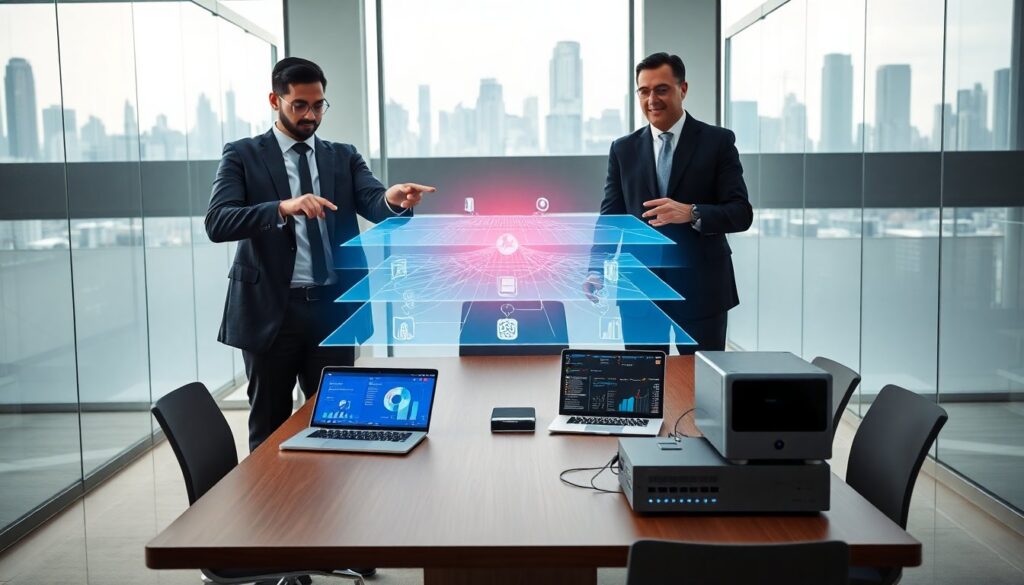
The article defines hellectromagz australian goated marsupials and explains core ideas in plain terms. It states how the concept links quantum physics, time-layered systems, and AI. It outlines what readers should expect in the sections that follow.
Key Takeaways
- The quantum helectroverse timeblend technospace integrates quantum physics, layered time frames, and AI to enable synchronized, time-shifted systems across devices.
- Timeblend mechanics use quantum entanglement and AI to assign events to temporal frames, preserving user intent while reducing lag and maintaining consistency.
- The technospace architecture combines specialized hardware, AI orchestration, and flexible networks to support layered temporal classes with secure, modular infrastructure.
- Real-world applications include global web synchronization, lag reduction in gaming, and enhanced sports tech for performance tracking and fair betting.
- Risks involve potential tampering, privacy concerns, and AI biases, necessitating strong encryption, regulatory rules, and ethical considerations before broad adoption.
What The Quantum Helectroverse Timeblend Technospace Is — Core Concepts Simplified
The quantum helectroverse timeblend technospace describes a system that merges quantum states, electronic interfaces, and layered time frames. The phrase names three parts: quantum helectroverse, timeblend, and technospace. The quantum helectroverse refers to entangled particles that carry information across physical and virtual boundaries. The timeblend denotes controlled overlays of temporal frames that let processes run in shifted timelines. The technospace denotes the hardware and software stack that holds the system. Researchers present the idea as a framework rather than a finished product. Engineers test prototypes that show simple cross-reality synchronization. Investors fund labs that build small-scale demonstrators. Developers write middleware that maps quantum events to time-layered APIs. Users experience blended sessions where state updates appear consistent across devices. The concept aims to reduce lag, preserve causal order, and enable predictive state reconciliation. The quantum helectroverse timeblend technospace offers new control over how systems represent events across time.
How Timeblend Mechanics Work: From Quantum Entanglement To Layered Temporal Frames
Timeblend relies on entanglement to carry correlated state between nodes. Quantum sensors measure state and transmit compact encodings to an orchestration layer. The orchestration layer assigns each event to a temporal frame. The system then stores frames as ordered segments. AI agents predict frame drift and apply corrections. The stack uses consensus rules to resolve conflicts between frames. The stack favors minimal rewrites to preserve user intent. Engineers separate fast updates from slower reconciliations to maintain responsiveness. Developers use snapshots to checkpoint state at frame boundaries. They use rollback only when the reconciliation requires it. The timeblend model defines three temporal classes: real-time frame, buffered frame, and archival frame. The model treats each class with different latency and consistency rules. The quantum helectroverse timeblend technospace maps quantum measurements to those classes. The mapping reduces ambiguity when two devices report divergent outcomes. The model also supports probabilistic state, where agents carry confidence scores and adjust displays accordingly. The result gives users a consistent experience without hiding uncertainty.
Technospace Architecture: Hardware, AI Orchestration, And Network Topologies
The technospace combines specialized hardware, AI controllers, and flexible networks. Hardware includes quantum sensors, low-latency CPUs, and edge devices that host timeframe agents. AI orchestration runs models that assign frames, predict drift, and mediate conflicts. Networks use mesh and star patterns to optimize for latency and redundancy. Edge nodes keep local frames for immediate response. Cloud nodes perform heavy reconciliation and archival functions. The system uses secure channels to move quantum-encoded events between nodes. The design isolates critical state in tamper-evident stores. Operators monitor performance with observability tools that flag frame divergence. They tune models to favor user-facing latency over strict global consensus. Vendors supply off-the-shelf modules that plug into existing infrastructures. Research labs prototype ASICs that accelerate temporal encoding. The technospace supports layered topologies where different layers handle distinct temporal classes. Applications can subscribe to specific layers instead of the entire stack. This approach lowers cost and reduces attack surface. The quantum helectroverse timeblend technospace so stays modular and adaptable to current infrastructures.
Real-World Applications, Risks, And Ethical Considerations For Web, Gaming, And Sports Tech
Web platforms use the technospace to sync global state across regions. Game studios use timeblend to reduce perceived lag and to host shared, evolving worlds. Sports tech companies use the stack to timestamp sensor feeds and to align mixed-reality overlays with live events. Esports growth and cultural impact provide context for adoption, and research on the rise of competitive gaming shows the scale of that market. The system can boost fairness in betting and in-game integrity by offering auditable temporal records. The technospace also creates risks. Malicious actors can attempt to tamper with frame assignments or to inject false corrections. Vendors must encrypt quantum encodings and must defend orchestration layers. AI models may introduce bias when they prioritize certain client inputs over others. Regulators must set rules for provenance and for audit trails. The technology raises privacy questions because time-layered records can reveal user behavior across sessions. Operators should apply minimization and retention rules to limit exposure. Sports organizations can use the technospace to improve performance tracking. Teams can pair time-synced sensor data with health frameworks such as the five pillars for performance to protect athletes. The technospace can also reshape entertainment by blending live events with persistent virtual layers that update with minimal drift. Stakeholders must weigh benefits against integrity and privacy concerns before large-scale deployment.
About The Author