Fyrconthius Lazenquill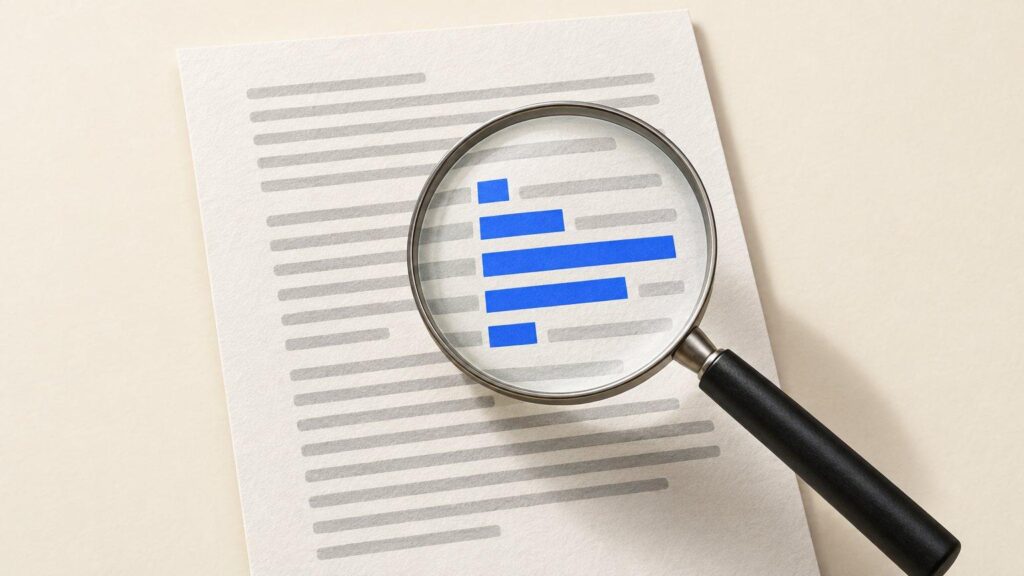
You ran the AI draft through a readability checker. The score came back fine, maybe a 65 on Flesch Reading Ease or a clean 8th grade level. But when you read it out loud, it sounds stiff. Or worse, an AI detector flags it anyway. Readability scores and AI detection measure two different things, and that gap is why a “good” score doesn’t guarantee natural-sounding prose. This piece walks through which formulas to trust, why AI drafts game them, and what to check before you hit publish.
What readability metrics measure
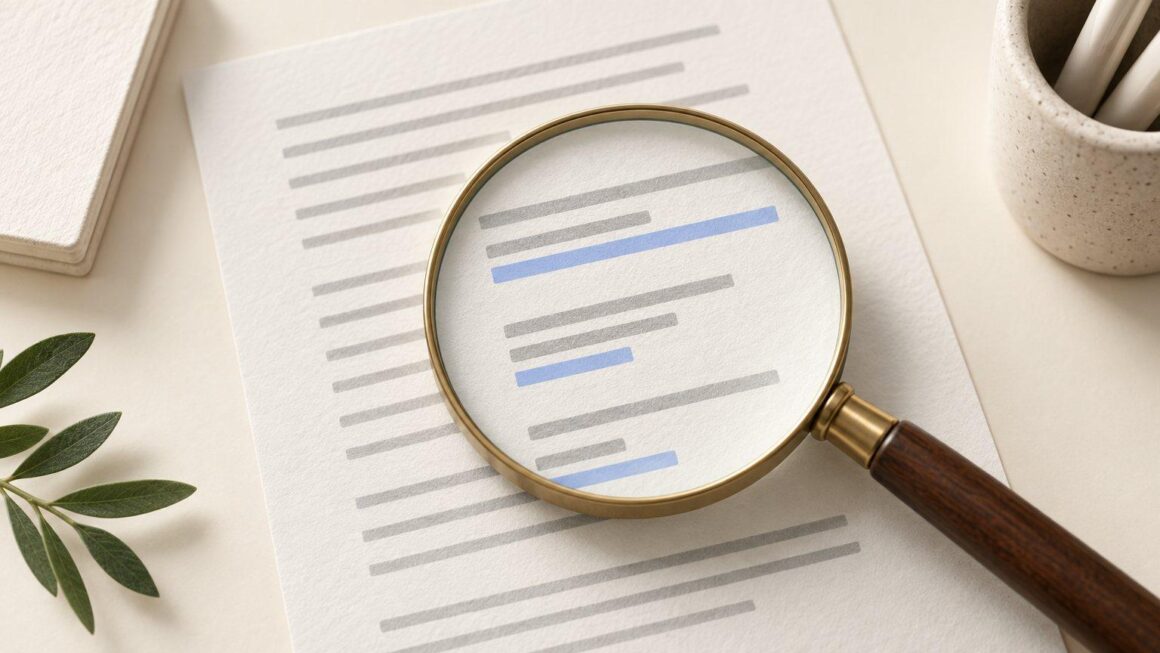
Readability formulas score surface features. They count average sentence length, average word length or syllable count, and little else. None of them read for meaning.
Most formulas give you one of two outputs. Either a 0 to 100 reading ease score, where higher means easier, or a grade level number tied to years of US schooling.
A Flesch Reading Ease score of 60 to 70 is generally treated as plain English, roughly the reading level of a 13- to 15-year-old, according to common scoring bands used by readability tools. That range is the usual target for general web content.
Here’s the catch for AI-drafted text. Language models tend to produce very uniform sentence lengths, and formulas reward that uniformity with an easy score, even when the rhythm reads flat or repetitive on the page.
A score tells you the text is easy to parse mechanically. It does not tell you whether a reader will find it engaging, trustworthy, or human.
That distinction matters more with AI drafts than with human copy, because the thing that makes AI text feel stiff, the sameness, is exactly what these formulas can’t detect.
Which readability formulas are worth checking
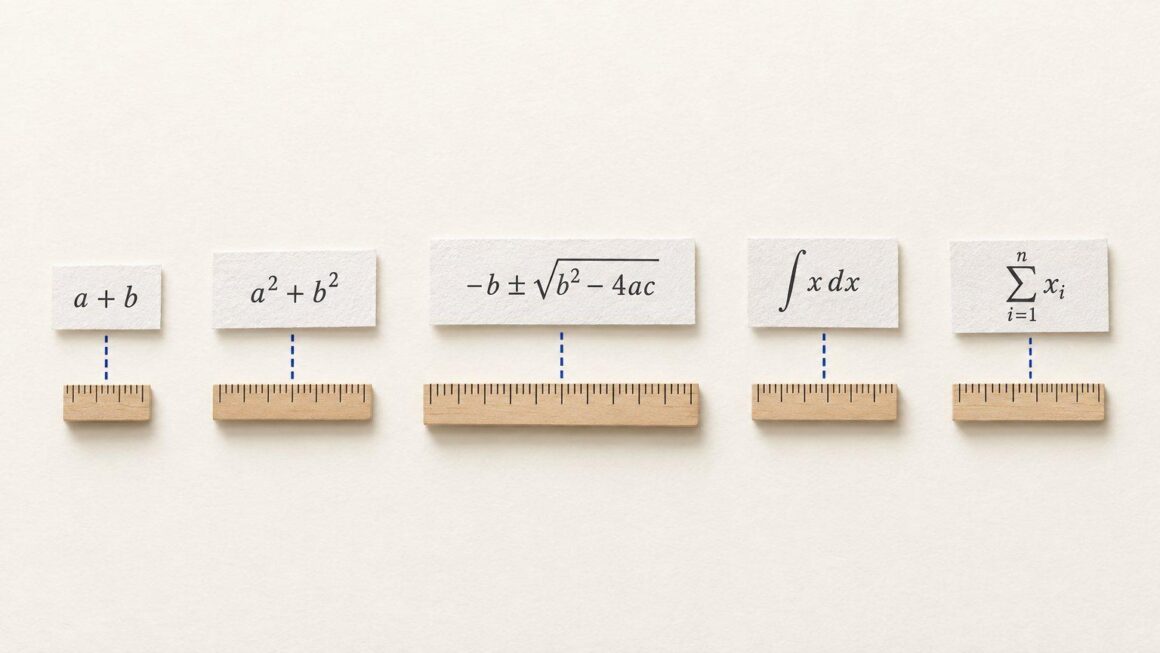
Not every formula measures the same thing, and picking the wrong one can hide the problem you’re trying to catch.
A quick comparison
|
Formula |
What it counts |
Best for |
|
Flesch Reading Ease |
Words per sentence, syllables per word |
General web and marketing copy |
|
Flesch-Kincaid Grade Level |
Same inputs, converted to a US grade number |
Style guides with a specific grade target |
|
Gunning Fog Index |
Words with three or more syllables flagged as complex |
Jargon-heavy business writing |
|
SMOG |
Complex words in a sample of sentences |
Health literacy and patient materials |
|
Coleman-Liau Index |
Characters per word instead of syllables |
Automated pipelines that can’t count syllables reliably |
Flesch Reading Ease gives you a 0 to 100 scale. A higher number means easier text, and it’s the most common score you’ll see in a general checker.
Flesch-Kincaid Grade Level takes the same underlying math and converts it into a school grade. Use this one when a style guide or client brief sets a specific grade-level target, like “write to an 8th grade level.”
Gunning Fog Index counts multi-syllable words as complex. It catches jargon-heavy business writing that a Flesch score alone can miss, since Flesch weighs sentence length just as heavily as word difficulty.
SMOG, the Simple Measure of Gobbledygook, was built for health literacy materials and is still the standard formula for scoring patient education content.
Coleman-Liau skips syllable counting entirely and uses characters per word instead. That makes it a good fit for automated content pipelines where syllable counting is unreliable.
Pick one primary metric that matches your audience mandate, usually Flesch-Kincaid Grade Level, and pair it with a secondary metric, Gunning Fog or SMOG, to catch what the primary one misses.
Why AI-generated text scores differently than human writing
Language models tend to generate sentences with similar length and structure. That lowers the sentence-length variance that readability formulas rely on to gauge difficulty, so the math looks cleaner than the prose reads.
Research backs this up, even outside the AI-writing context. A study published on PMC scoring medical documents found that Flesch-Kincaid Grade Level had a concordance of only .531 with human difficulty ratings, compared to .734 for a machine learning ranking model built for the same task. The formula missed real-world difficulty that human readers picked up on immediately.
AI drafts often overuse transition phrases and hedging language. Words like “additionally,” “it’s important to note,” and “in many cases” add length without adding real complexity, so the score stays in range while the prose feels padded.
Here’s the part worth remembering when you’re judging a draft: a low grade-level score is not proof a human wrote the text, and a high grade-level score is not proof an AI wrote it. Readability and authorship are separate signals, and treating them as the same thing leads to bad calls.
Abbreviations, lists, and short clipped sentences can artificially lower a score. Researchers found this exact problem when scoring electronic health records, where short medical shorthand read as “easy” to the formula but was harder for patients to understand. Generic AI filler sentences create a version of the same distortion, just in the opposite direction: padded but structurally simple.
How to check readability metrics on your own draft

Here’s a practical sequence to run before you publish anything AI-assisted.
That last step gets skipped constantly, and it’s the one that catches mistakes before they go live.
Common mistakes when judging AI text by its score
A few habits show up again and again in editorial review, and they all lead to the same outcome: a passable score sitting on top of unpublishable prose.
- Treating one number as pass or fail. A score is a range that fits an audience, not a binary gate. An 8.2 grade level isn’t automatically worse than a 7.9.
- Chopping sentences to chase a lower grade level. This breaks meaning or turns the tone choppy, trading one problem for another.
- Relying on only one formula. Flesch Reading Ease alone can miss complex-word problems that Gunning Fog or SMOG would flag immediately.
- Ignoring how lists and abbreviations skew scores. Researchers noted this effect scoring electronic health record notes, where short technical fragments read as artificially easy. The same distortion applies to AI text padded with short filler clauses.
- Skipping the re-check after edits. A rewrite pass, whether it’s a human edit or a humanizing tool, can shift the grade level without anyone noticing until a reader complains.
Each of these is fixable with one extra step: check twice, and check more than one formula.
Is a readability score the same as an AI detection check

No, and mixing these two up is one of the most common gaps in an editorial review workflow.
Readability formulas measure sentence and word complexity. AI detectors measure statistical patterns, things like burstiness and word-choice predictability. They are answering different questions entirely.
Text can score as easy to read and still get flagged as AI-written. The flag is about pattern uniformity, not difficulty, so a simple, clean sentence structure that never varies is exactly what trips a detector.
Text can also score as difficult and still pass as human-written, if the sentence variety and word choice look natural. A dense paragraph with irregular rhythm reads human even at a high grade level.
If you’re publishing AI-assisted drafts, run two separate checks: a readability check for audience fit, and a separate detection or humanizing pass for voice and pattern. One test does not cover the other, and treating them as interchangeable is how flagged content slips through editorial review.
What to do next with your draft
Score your current draft on two formulas today, one reading-ease number and one grade-level number, then eyeball the sentence-length variation across a few paragraphs.
If the score passes but the rhythm still feels flat, mark three paragraphs for a rewrite before you publish. Don’t let a passing number talk you out of a read-aloud check.
Set a target range in your style guide instead of a single exact score, so editors aren’t chasing a number that doesn’t fit the audience.
FAQ
What is a good readability score for AI-generated content?
There’s no separate standard for AI text. Use the same target as human copy: a Flesch Reading Ease score of 60 to 70, or roughly an 8th to 9th grade Flesch-Kincaid level, for general web content. What matters more for AI drafts is checking sentence-length variation, since a passing score can hide flat, uniform rhythm.
Can readability formulas detect AI-generated text?
No. Readability formulas measure sentence and word complexity, not authorship or writing patterns. AI detection relies on separate signals like sentence-length uniformity and word predictability, which is why a piece can score as easy to read and still get flagged as AI-written.
Does Google use readability scores as a ranking factor?
Readability scores aren’t a confirmed Google ranking factor. Clear, well-structured content tends to perform better because it serves readers, not because it hits a specific Flesch or grade-level number. Write for the audience first and treat the score as a diagnostic, not a target to game.
Which readability formula should I trust most for AI drafts?
No single formula is fully reliable for AI text, since uniform sentence length can trick most of them into an easy score. Check Flesch-Kincaid Grade Level as your primary metric, then run Gunning Fog or SMOG as a secondary check, and always look at sentence-length variation by eye alongside the numbers.
About The Author