Phrendylor Xyventhari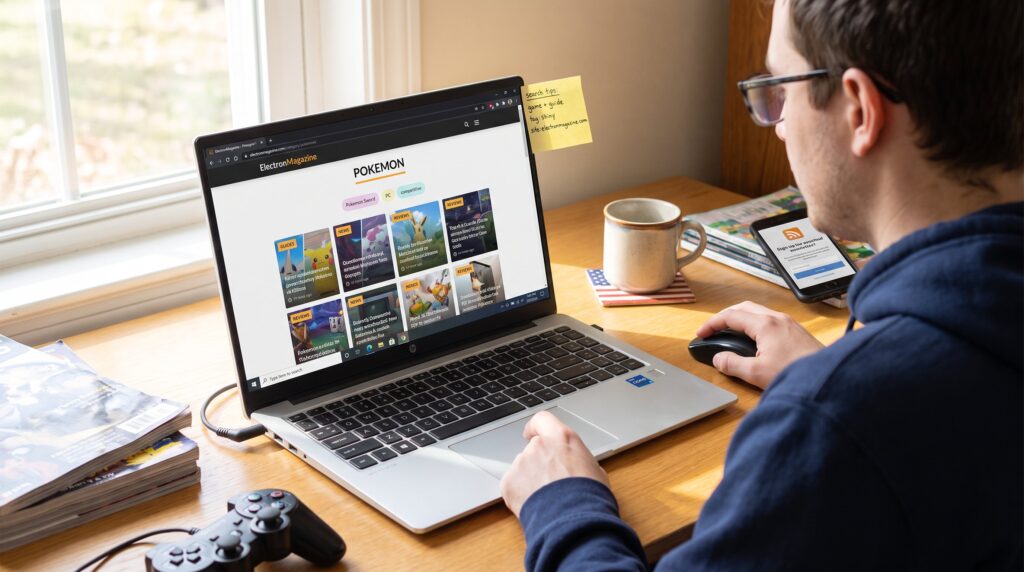
Pokemon Articles on ElectronMagazine start in the site’s dedicated Pokemon archive and spread across guides, news, and reviews. This guide explains where those pieces live, how to find game-specific coverage, and how to follow new posts. It assumes the reader wants quick access, whether they need a competitive build, release news, or a hands-on review for PC, console, or mobile. The steps below show exact paths, search tips, and subscription options so they can reach the right Pokémon story fast.
Key Takeaways
- ElectronMagazine’s primary hub for Pokémon articles is the Pokemon category archive, where most franchise content is aggregated by date and topic.
- For practical Pokémon information, focus on the Guides for walkthroughs, News for latest releases and patches, and Reviews for in-depth game analysis and performance insights.
- Use specific game titles and modifiers like ‘review’ or ‘shiny guide’ in searches to quickly find targeted Pokémon articles, utilizing tags and filters to refine results.
- Following favorite authors, subscribing to newsletters, or using RSS feeds linked to the Pokemon category helps readers stay updated with new Pokémon posts efficiently.
- Combining site search with category navigation allows Pokémon fans to access different content types—news, guides, reviews, and gaming analyses—without missing relevant updates.
How ElectronMagazine Organizes Pokémon Coverage
ElectronMagazine groups Pokémon content into a main Pokemon category and cross-posts into News, Reviews, Guides, and Gaming sections. The fact: most Pokémon articles appear first in the Pokemon category archive at /category/pokemon/. That archive aggregates game guides, card features, show write-ups, and timely news.
Why this matters: a reader who lands on the archive sees related posts queued by date and topic, plus on‑page related links that surface older but relevant guides. The editorial flow is simple: a breaking update goes to News, a walkthrough lands in Guides, and long-form analysis appears in Reviews. Authors use tags for specific games (for example, “Sword” or “Legends”) so the same post shows in multiple navigational contexts.
Practical tip: when a reader wants a snapshot of ElectronMagazine‘s remit and recurring topics, a short primer like the site’s central overview helps frame what to expect. For context on the site’s scope, consult a concise guide on the site’s mission and coverage in the editorial pillar.
Best Categories To Browse For Pokémon Content
Start with the Pokemon category, this is the primary hub for franchise coverage. The fact: the majority of franchise stories, from card previews to game patches, are filed there.
Next, check Gaming, News, Reviews, and Guides sections. Each serves a different need: News for releases and events, Guides for step‑by‑step play, Reviews for in-depth testing, and Gaming for cross-title analysis. For example, competitive meta breakdowns may appear under Gaming even if they reference a specific Pokémon title.
A helpful shortcut is to use category navigation in sequence: open Pokemon, then click the site’s Gaming and Guides menus to fill gaps. For readers who prefer a single curated view, ElectronMagazine‘s feature on the site’s content ecosystem gives a clear map of where different formats appear: see the editorial overview for that context via the site’s core guide. This ties into the full guide published on the site.
Top Category: Guides, News, And Reviews
Guides, News, and Reviews form the practical core for Pokémon readers. The fact: these three formats capture most how‑tos, patch notes, and first‑hand critiques.
Guides include walkthroughs, competitive builds, and troubleshooting steps. News covers patches, event announcements, and release windows. Reviews measure performance, gameplay balance, and value across platforms. A reader hunting for advice on team composition will find stepwise builds in Guides: a reader deciding whether to buy a port will rely on Reviews.
Example: a recent hands‑on review contrasted two ports’ framerate on PC and Switch and included concrete metrics, 30 vs 60 fps in docked mode, so readers could judge performance. When searching, readers should favor pages in Guides for actionable steps and Reviews for purchase decisions.
Internal links: to read deep franchise features and exclusive tips, see an extended franchise overview and trainer tips in the site’s dedicated pieces.
How To Use Search, Tags, And Filters Effectively
Search first with game names, then with event or mechanic terms. The fact: ElectronMagazine‘s search returns category and tag matches, so ‘Pokemon Legends’ plus ‘walkthrough’ narrows results to Guides and related posts.
Use tags to slice by topic. Tags often include platform names (Switch, PC), terms like ‘competitive’ or ‘shiny’, and game versions. Combine the site search with the Pokemon archive to avoid noise: open /category/pokemon/ and then search within results for a tighter set.
Filters and menus reduce scope quickly. Readers who need only news should open the News menu and add ‘Pokemon’ as a tag filter. If the site’s built‑in search falls short, browser search (site:electronmagazine.com “Pokemon” “guide”) often surfaces buried posts.
Related resource: for general site navigation and following posts, the article on tracking new site updates outlines newsletter and feed options.
Finding Pokémon Articles By Game, Platform, And Topic
Search by exact game title for the fastest result. The fact: articles tagged with game names (for instance, ‘Pokemon Sword’ or ‘Pokemon Legends’) appear in both the Pokemon category and relevant format sections.
Strategy: enter the game name plus a modifier, “review”, “patch”, “shiny guide”, or the platform like “PC”, to get focused results. That approach finds comparisons such as ‘Pokemon Sword vs Shield’ features and platform-specific how‑tos.
Example: someone seeking emulator setup instructions should search ‘ROM’ or the emulator name together with ‘Pokemon’ to find prior step‑by‑step posts. When a comparison is required, like choosing between Sword and Shield, specific comparison posts exist in the archive and offer explicit pros, cons, and platform notes.
Contextual links: deeper title-focused coverage and specific comparisons appear in dedicated pages, including a page that compares the two main titles and a profile on breakout new Pokémon like Shroodle.
Follow Authors, Newsletters, And RSS Feeds For New Posts
Subscribe to an author, newsletter, or the site RSS to get new Pokémon posts automatically. The fact: ElectronMagazine supports standard newsletter signups and RSS workflows that readers can adapt to common feed readers.
How they subscribe: pick an author from a favorite article and bookmark their author page, sign up for the site newsletter, or add the site feed to a reader. Advanced users can create an RSS feed for a specific tag or category with external feed builders and then follow just “Pokemon” updates.
Why it helps: authors specializing in franchise topics tend to publish recurring columns, following them cuts discovery time. For technical readers who want a machine‑friendly stream, an RSS feed tied to the Pokemon archive can deliver each post as it goes live.
Practical anchor: for a short primer on keeping up with site updates and automating feeds, refer to the site’s walkthrough on following new posts.
Conclusion
ElectronMagazine’s Pokémon coverage is most accessible through the Pokemon archive, plus the Guides, News, and Reviews sections. Readers who learn the search and tag tricks, follow key authors, and subscribe to feeds will cut discovery time and stay current with releases and analysis.
About The Author