Power, Protection, and Immortality: The Hidden Language of Ancient Egyptian Jewelry
 Greg Mcfee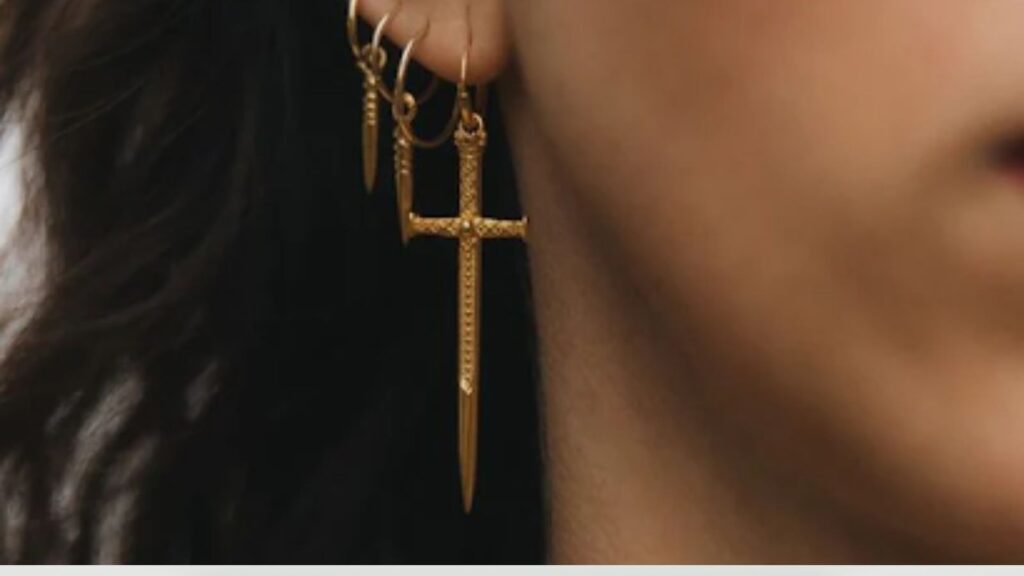
Ancient Egyptian jewelry was never created in isolation from belief. Every form, symbol, and material reflected a worldview in which protection, continuity, and power were essential to both daily life and the afterlife. Jewelry functioned as a visual system of meaning — worn not to decorate the body, but to reinforce order, identity, and spiritual balance in a world governed by both visible and invisible forces.
This symbolic approach to adornment is what continues to make Egyptian jewelry compelling today. Its enduring presence lies not in ornament alone, but in the way objects were designed to convey intention, serving as personal markers of protection, resilience, and authority.
Symbols as a Visual Language
Egyptian jewelry relied on a clear symbolic vocabulary that could be read and understood across society.
The ankh, one of the most recognizable forms, represented life and continuity. Frequently depicted in temple reliefs, it symbolized the sustaining force that connected human existence to the divine. As jewelry, the ankh was worn as an emblem of vitality and endurance rather than as an abstract symbol of belief.
The scarab carried equally deliberate meaning. Associated with the sun’s daily rebirth, it reflected transformation and renewal. Scarabs appeared in rings, pendants, and seals, reinforcing the idea that personal identity was tied to cyclical regeneration rather than linear time.
The Eye of Horus served a different role. It symbolized protection, restoration, and balance. Often used as an amulet, it was believed to guard the wearer against disruption — physical or symbolic — and to preserve wholeness in an unpredictable world.
These symbols were not decorative variations. They were functional signs, chosen intentionally and worn with awareness of their protective and stabilizing significance.
Material Choices and Meaning
Equally important was the choice of material. Ancient Egyptian jewelry was crafted using substances that carried meaning beyond appearance.
Gold represented permanence and divine authority. Because it does not tarnish or decay, it became associated with immortality and the eternal nature of the gods. Its use signaled continuity and power rather than wealth alone.
Black stone, including obsidian and similar materials, was valued for its association with the fertile darkness of the Nile soil and the unknown. In Egyptian thought, black was not a negative absence but a symbol of origin, protection, and regeneration. Its presence in jewelry reinforced grounding and resilience.
Brass, while not as rare as gold, played an important role in later Egyptian-inspired metalwork traditions. Its warm tone and durability made it suitable for pieces intended for regular wear, reinforcing the idea that symbolic jewelry was meant to be lived with — not reserved only for ceremony.
Together, these materials formed a visual balance between light and shadow, permanence and transformation.
Jewelry as Protective Structure
Jewelry in ancient Egypt was inseparable from function. Amulets were placed on the body to reinforce protection, worn daily or buried with the deceased to maintain balance beyond death. Neck collars, rings, and pendants were arranged deliberately, reflecting hierarchy, identity, and spiritual order.
Rather than serving as expressions of excess, these objects reinforced stability. Jewelry was a form of structure — something that anchored the wearer within cosmic and social systems.
This approach explains why Egyptian motifs continue to resonate. They offer clarity in design: symbols with defined meaning, forms with purpose, and materials chosen for endurance rather than trend.
Ancient Egyptian Symbolism and the Modern Noir KĀLA Aesthetic
The enduring appeal of Egyptian jewelry lies in its restraint and intentionality — qualities that align naturally with the design philosophy behind Noir KĀLA. We draw from ancient visual languages without replicating them. Its jewelry reflects the same principles that defined Egyptian adornment: symbolism over excess, strength over ornamentation, and form guided by meaning. The brand’s use of dark finishes, sculptural lines, and grounded materials echoes the Egyptian balance between power and protection.
Rather than presenting jewelry purely as decorative, we treat each piece as a personal object — something worn close to the body, carrying symbolic weight. The designs resonate with individuals drawn to yoga jewellery, meditation rings, and reiki healing jewellery, where intention and presence matter as much as form.
In this sense, we don’t imitate ancient Egyptian jewelry; it continues its logic. The pieces emphasize contrast, solidity, and clarity, allowing wearers to engage with jewelry as a quiet marker of identity and inner focus. The result is adornment that feels deliberate, grounded, and enduring — much like the ancient symbols that inspired it.
Conclusion
Ancient Egyptian jewelry offers a blueprint for meaningful adornment. Through symbols like the ankh, scarab, and Eye of Horus, and through materials chosen for their permanence and protective associations, these objects formed a language that extended beyond aesthetics.
That language still speaks today. Modern interpretations that respect symbolism and restraint allow jewelry to function as more than an accessory — as a personal constant, worn with intention. By drawing on these principles, contemporary design can preserve the essence of ancient adornment: jewelry as protection, structure, and silent expression.
About The Author