Rocket League Championship Series (RLCS): Your Complete Guide to Competitive Car Soccer in 2026
 Fyrconthius Lazenquill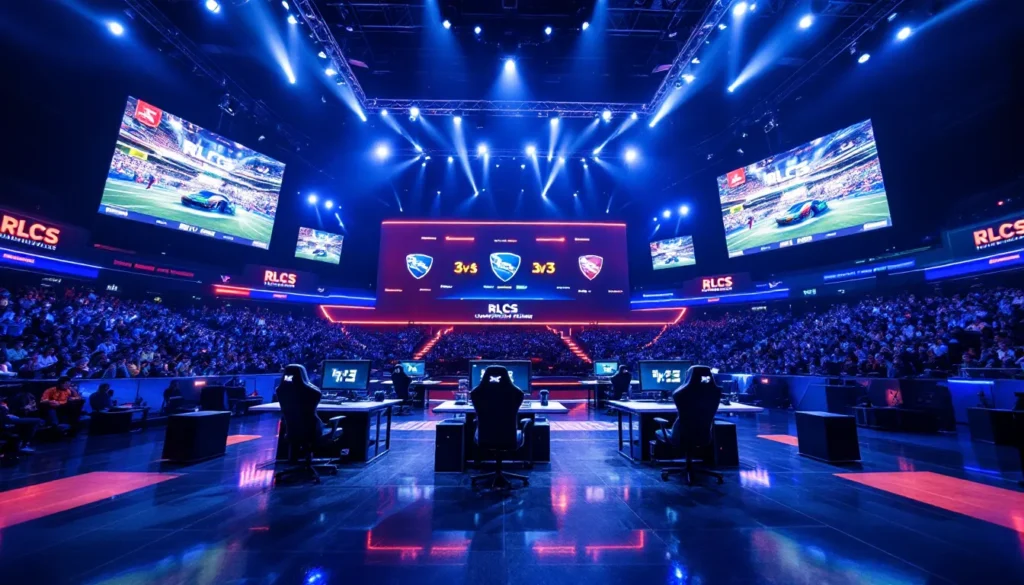
The RLCS has evolved from a scrappy upstart tournament into one of esports‘ most technically demanding circuits. It’s where split-second aerial redirects meet million-dollar prize pools, and where unknown teams can catapult into stardom in a single bracket run. Whether you’re a veteran chasing Grand Champion or a casual player curious about what the pros do differently, understanding the RLCS ecosystem gives you a front-row seat to the highest level of Rocket League competition, and practical insights you can take straight into your own ranked grind.
Key Takeaways
- The RLCS has grown from a $250,000 tournament in 2016 to a $6 million competitive circuit in 2025-26, featuring year-round regional events and international majors that culminate in the World Championship.
- Success in Rocket League Championship Series competition requires mastering role flexibility, fast challenges, demo plays, and boost denial strategies rather than relying on flashy mechanics alone.
- Professional teams earn prize money through regional competitions ($2.16 million annually), three international majors ($1.5 million), and the World Championship ($2.3 million), with additional revenue from org salaries, streaming, and sponsorships.
- To improve from ranked play toward RLCS-level competition, focus on rotation discipline, replay analysis, and consistency over complex mechanics, while studying how top players position themselves under pressure.
- The 2026 RLCS landscape features emerging regional powerhouses like Falcons Esports challenging traditional dominators like Team Vitality and G2 Esports, as underrepresented regions gain competitive investment and representation.
- Open qualifiers provide pathways for unknown teams to earn RLCS spots, but the skill gap between qualifier squads and established professional rosters is massive, requiring upset victories and thousands of training hours to sustain.
What Is the Rocket League Championship Series?
The Rocket League Championship Series is Psyonix’s flagship competitive circuit, bringing together the best 3v3 teams from around the globe to compete for championship titles and substantial prize money. It’s the apex of professional Rocket League, featuring year-long competition across multiple regions that culminates in a World Championship event.
Think of it as the UEFA Champions League of car soccer: regional qualification, international rivalries, and a format designed to crown the undisputed best team on the planet.
History and Evolution of the RLCS
The RLCS kicked off in 2016, just months after Rocket League’s explosive launch. Early seasons featured a relatively straightforward format: online league play followed by LAN finals with eight teams competing for around $250,000 total.
By Season 3, Psyonix had introduced the promotion/relegation system borrowed from traditional European football, forcing bottom-tier teams to fight through relegation tournaments while challengers battled for their spot. It was brutal, dramatic, and occasionally heartbreaking.
The circuit underwent a massive overhaul for the 2021-22 season, abandoning the league play model entirely in favor of a split-based format with multiple Majors throughout the year. This new structure emphasized consistency over entire seasons rather than single-weekend performances, and increased regional representation globally.
Fast forward to 2026, and the RLCS has matured into a year-round spectacle with more international competition, better prize distribution, and enough drama to rival any scripted series.
How the RLCS Format Works
The RLCS operates on a seasonal calendar divided into competitive splits. Each split features multiple Regional events where teams earn points toward their seasonal standing, followed by an international Major tournament that brings the top teams from every region together.
Teams compete in a 3v3 format across best-of-five or best-of-seven series depending on the stage. Matches use standard competitive rules: 5-minute regulation, unlimited overtime until golden goal, and no mutators or modifiers.
The beauty of this system is that consistency matters. A team can’t just show up hot for one weekend and claim a championship, they need to perform across months of competition, adapt to meta shifts, and prove they belong on the international stage repeatedly.
Points accumulated throughout the season determine World Championship seeding, making every Regional and Major consequential even for top-tier teams.
Current RLCS Structure and Competition Format
The 2026 RLCS structure builds on the split-based framework introduced in recent seasons, with refinements that emphasize international competition and regional depth.
Regional Events and Split System
The season is divided into three competitive splits, typically running from fall through summer. Each split contains three Regional events per region, North America, Europe, South America, Oceania, Middle East & North Africa, Asia-Pacific North, Asia-Pacific South, and Sub-Saharan Africa.
Regional events follow a Swiss-stage format leading into single-elimination playoffs. Teams earn RLCS points based on their placement:
- 1st place: 301 points
- 2nd place: 250 points
- 3rd-4th place: 200 points
- 5th-8th place: 150 points
- 9th-12th place: 100 points
- 13th-16th place: 50 points
These events are where the grind happens. Teams play dozens of matches per split, and the difference between making a Major or watching from home often comes down to a single overtime goal in a Swiss round.
The top 16 teams per region (determined by cumulative points across the split) maintain their spots for the next split, while lower-ranked teams must re-qualify through open qualifiers.
Majors and the World Championship
Each split concludes with an international Major, typically a multi-day LAN event held in major cities around the world. The number of qualification spots per region varies based on competitive strength and past performance, but generally:
- Europe and North America receive the most spots (typically 5-6 each)
- South America, MENA, and Oceania get 2-3 spots
- Remaining regions receive 1-2 spots plus wildcard allocations
Majors use a similar Swiss-to-bracket format but feature best-of-seven series in later rounds. They’re where the highest level of play emerges, jet-lagged teams adapting to LAN pressure, crowd noise, and opponents they’ve studied for months.
The World Championship happens at the end of the season, bringing together the top 16-24 teams globally based on total season points. It’s the biggest prize pool, the most prestige, and the tournament that defines legacies.
Points System and Rankings
The RLCS points system rewards both consistency and peak performance. Teams need strong Regional showings to accumulate enough points for Major qualification, but international Major placements provide the most significant point hauls.
Rankings update after every event, and they dictate everything: who qualifies for the next Major, which teams get World Championship bids, and who’s forced back into open qualifiers.
For players, points also affect eligibility for year-end awards and all-star selections. It’s a meritocracy in the truest sense, perform consistently or get left behind.
Top RLCS Teams and Players to Watch in 2026
The competitive landscape shifts constantly with roster changes, meta evolution, and breakout performances, but certain organizations and players have cemented themselves as perennial threats.
Dominant Teams Across Regions
Team Vitality remains Europe’s most decorated franchise with multiple Major wins and World Championship appearances. Their disciplined rotations and suffocating defense set the standard for team play, though roster shuffles in late 2025 have some questioning whether they can maintain dominance.
G2 Esports has been North America’s flagship org since the early RLCS days. After years of near-misses, they broke through with a World Championship in the 2023-24 season and haven’t looked back. Their fast-paced, demo-heavy playstyle forces opponents into uncomfortable positions and creates scoring opportunities through chaos.
FURIA Esports leads the charge from South America, proving that the region’s mechanical talent can compete with anyone when given the stage. Their aggressive challenges and 50/50 dominance catch European teams off-guard regularly.
PWR from Oceania continues punching above their weight class, consistently making deep Major runs even though fewer qualification spots. They’re the ultimate dark horse, underestimated until they’re reverse-sweeping you out of the bracket.
New orgs like Falcons Esports (MENA) have injected fresh blood and oil money into the circuit, signing superstar rosters that immediately contend for championships. Their rise reflects the growing investment in esports infrastructure across underrepresented regions.
Star Players Defining the Meta
Daniel (formerly of Team Vitality, currently with Gen.G) might be the most mechanically gifted player the game has ever seen. His flip resets, ceiling shots, and unpredictable offense force entire defensive schemes to adjust. He’s the kind of player who makes Grand Champions look like Platinum scrubs.
Beastmode (G2 Esports) earned his name through relentless pressure and demolition plays that create 2v3 or even 1v3 advantages. His boost management and positioning allow him to maintain offensive pressure for entire possessions without returning for pads.
Vatira (Team Vitality) represents the new generation of complete players, elite mechanically but also a defensive anchor with rotation discipline that veterans respect. He won World Championship MVP at just 16 years old.
Yanxnz (FURIA) leads South America’s charge with suffocating defense and clutch goals when it matters most. He’s the heart of FURIA’s system, transitioning defense into counterattacks with surgical precision.
Trk511 (Falcons) brought MENA into the elite conversation almost single-handedly, with speed and unpredictability that makes him impossible to mark. His air dribbles and musty flicks are highlight reel material, but his shadow defense might be even more impressive.
Watch these players and you’ll see the meta in real time: faster challenges, tighter rotations, and mechanical skill that would’ve been unthinkable in Season 1.
How to Qualify for the RLCS
Making it to the RLCS isn’t about luck, it’s a grind through open qualifiers and regional competition that separates dreamers from competitors.
Open Qualifiers and the Path to Pro
Every RLCS split begins with open qualifiers, where any registered team can compete for a spot in the Regional events. These are Swiss-format tournaments played online, usually across multiple days.
You’ll need:
- A registered 3-player roster (plus optional substitutes)
- All players at Champion rank or higher in competitive playlists
- Residency eligibility for your target region
- A whole lot of patience for bracket resets and server lag
The top-finishing teams from open qualifiers earn spots in the Regional event for that split. Typically 4-8 qualifier teams join the 8-12 teams already seeded from previous performance.
This system theoretically allows unknown teams to break through. Realistically? The skill gap between established Regionals teams and qualifier squads is massive. You’ll need to upset at least one mid-tier professional team to advance, which means executing under pressure against players who’ve been competing at this level for years.
But it happens. Every season sees at least one Cinderella qualifier team make a deep run, and occasionally they stick around long enough to earn stability.
Regional Championship Requirements
Once you’re in Regional competition, staying there requires consistency. Teams that finish 17th or lower in season points drop out and must re-qualify through opens.
To stay competitive, most pro teams:
- Scrim daily against other RLCS rosters
- Review replay files to identify mistakes and opponent tendencies
- Work with coaches and analysts on rotation theory and positioning
- Grind ranked to maintain mechanical sharpness (most pros hover around 2000-2200 MMR)
Many competitive players follow tournament formats similar to other major esports titles, establishing structured practice schedules and team houses to maximize improvement.
The jump from Champion-ranked solo queue hero to professional competitor is measured in thousands of training hours, not months of casual play.
Where and How to Watch RLCS Matches
RLCS broadcasts have evolved significantly since the early days of single-stream coverage, now offering multiple viewing options and integrated rewards.
Official Streaming Platforms
The primary RLCS broadcasts air on Twitch.tv/RocketLeague, featuring professional commentary, analysis desks, and player interviews. Regional broadcasts also run simultaneously in native languages on dedicated channels, Spanish, Portuguese, French, German, and more.
You’ll also find RLCS coverage on YouTube (Rocket League Esports channel) with both live streams and VODs. YouTube’s superior video player and rewind functionality make it ideal for catching up on matches you missed.
Major tournaments often get co-streams from popular content creators, offering alternative commentary and perspectives. Players like Rizzo, Musty, and Pulse Fire provide more casual, meme-heavy coverage that appeals to viewers who want entertainment alongside competition.
Broadcasts typically include:
- Live match feeds with player POV cameras
- Real-time boost meters and positioning overlays
- Instant replays of major plays and goals
- Post-game analysis with former pros breaking down strategies
The production quality rivals traditional sports broadcasts, complete with storyline packages and hype videos that’ll get you invested even if you don’t recognize the teams.
In-Game Viewing and Rewards
Psyonix integrated an Esports Shop directly into Rocket League, allowing players to purchase team decals, wheels, and banners to support their favorite orgs. A percentage of sales goes directly to the teams.
During Major tournaments, you can watch matches inside the game client through the RLCS viewing portal. This gives you full camera control, follow individual players, watch from ball-cam, or get a tactical overhead view that broadcasts can’t provide.
Watching on linked accounts (Twitch connected to your Epic Games account) earns you Esports Tokens and exclusive drops. These rewards include:
- Limited-edition decals and wheels
- Player banners and titles
- Crown borders and special effects
Drop rates increase during Major weekends and Championship events. Just leave the stream running (muted counts) and collect your rewards after matches.
It’s a smart system that encourages viewership while letting fans show org support beyond just watching.
The Prize Pool and What’s at Stake
RLCS prize pools have grown substantially since the circuit’s inception, though they still trail behind juggernauts like Dota 2 or League of Legends.
The 2025-26 season features approximately $6 million in total prize money distributed across Regional events, Majors, and the World Championship. Here’s the breakdown:
Regional Events: Each Regional offers $30,000 in prizes split among top finishers. With three Regionals per split and three splits, that’s $270,000 per region annually. Multiply across eight regions and you’re looking at $2.16 million just from Regional competition.
Majors: Each of the three international Majors distributes roughly $500,000, totaling $1.5 million. First place typically takes home $120,000-$150,000, providing serious financial incentive beyond just qualification points.
World Championship: The season finale boasts the largest single prize pool at approximately $2.3 million. The winning team splits around $600,000, with substantial payouts extending deep into the bracket. Even teams eliminated in the first round still walk away with five-figure earnings.
For context, the inaugural RLCS Season 1 World Championship in 2016 had a $55,000 prize pool. The growth reflects Rocket League’s staying power and Psyonix/Epic Games’ commitment to maintaining a premier competitive scene.
Beyond tournament winnings, top players earn income through:
- Org salaries (six figures for established players)
- Streaming revenue and sponsorships
- Content creation on YouTube and TikTok
- Esports Shop revenue sharing
The financial landscape has professionalized considerably. Players who grind RLCS full-time can build legitimate careers, and organizations invest heavily in coaching staff, analysts, and team houses.
It’s not Fortnite or Valorant money, but it’s enough to sustain a competitive ecosystem and reward the players who dedicate themselves to the grind.
RLCS Meta Strategies and Competitive Trends
The professional meta has evolved dramatically from the “rotate back post and hope someone scores” strategies of early seasons. Modern RLCS play demands coordination, speed, and mechanical execution that looks like controlled chaos to the untrained eye.
Current Playstyles and Team Compositions
Most top teams operate with flexible role assignments rather than rigid positions. But, general archetypes emerge:
The Third Man prioritizes defensive positioning and boost management. They’re the safety net who prevents counterattacks and transitions the ball forward. Think last defender in soccer, boring when they do their job correctly, catastrophic when they don’t.
The Second Man exists in the gray area between offense and defense, applying mid-pressure and covering passing lanes. They challenge when the third man has boost and defensive position secured, and they rotate back when teammates push up.
The First Man maintains offensive pressure, forces saves, and goes for demos when shooting angles close. They also, and this is critical, rotate out quickly when possession changes rather than ballchasing into oblivion.
These roles rotate constantly based on positioning and boost levels. The teams that win Majors are the ones who read rotation needs instantly and adjust without comms.
Strategically, the meta has shifted toward:
- Faster challenges: Giving opponents time and space is death. Teams challenge aerials earlier and contest 50/50s more aggressively.
- Demo plays: Strategic demos on goalies or would-be defenders create scoring windows. Players like Beastmode have turned demolitions into an art form.
- Boost denial: Starving opponents of boost forces them into weaker positions. Teams coordinate small-pad pickups to maintain pressure without fully rotating back.
- Fake challenges: Pros fake going for balls to bait opponents into committing, then capitalize on the overcommit.
These tactics mirror strategies seen across competitive games, where team coordination and meta knowledge separate good teams from championship contenders.
Team compositions rarely feature “specialists” anymore. Every player needs elite mechanics, solid defense, and the game sense to rotate properly. One-dimensional players get exposed and exploited.
Mechanical Skills That Separate Pros from Amateurs
If you watch RLCS without knowing what to look for, it just looks like fast cars flying everywhere. But specific mechanics appear in pro matches far more frequently than ranked play:
Flip resets: Using the underside of your car to touch the ball mid-air and regain your flip for unpredictable shots. Pros chain multiple resets or use them for sudden direction changes that beat defenders.
Ceiling shots: Dropping from the ceiling to maintain your flip while challenging aerials higher than opponents can reach. They’re less about scoring directly and more about forcing awkward saves.
Speed flips: The fastest possible kickoff technique, requiring diagonal flip cancels and precise timing. Win kickoffs consistently and you control possession.
Air dribbles and air roll shots: Maintaining ball control while aerial, using air roll left/right to adjust angles mid-flight. This creates shots from impossible angles that goalies can’t predict.
Shadow defense: Matching an opponent’s speed while facing the same direction, maintaining perfect distance to challenge without committing. It’s the difference between getting dunked on and forcing a weak shot.
Backboard reads: Predicting bounces off the back wall and immediately transitioning to offense. Amateurs panic and clear, pros boom backboard shots into the opposite net.
Boost management: Pros complete entire rotations on small pads, never fully leaving the play. They know every pad location instinctively and route through them without conscious thought.
These aren’t flashy mechanics for montages, they’re essential tools that appear dozens of times per match. The gap between Champion-ranked players and RLCS pros isn’t raw car control. It’s decision-making speed, consistency under pressure, and the ability to execute these techniques while tracking two opponents and two teammates simultaneously.
How to Improve Your Game Using RLCS Insights
Watching professional Rocket League isn’t just entertainment, it’s a masterclass in positioning, mechanics, and decision-making that you can import directly into your ranked grind.
Start by watching matches with intention. Don’t just follow the ball like a spectator. Pick one player, preferably one who plays a style similar to yours, and watch only them for entire matches. Notice where they position when teammates have possession, how they challenge aerials, and when they rotate back versus staying forward.
You’ll immediately spot differences between your play and theirs:
- They challenge 50/50s faster than you thought possible
- They rotate toward back post instead of cutting mid
- They fake challenges to bait opponents into committing
- They pick up small pads in routes that keep them relevant to the play
- They flip into the ball even on clears to generate power and deny counterattacks
After watching, load into custom training packs focused on the specific situations you identified. If you noticed pros consistently winning backboard 50/50s, spend 20 minutes on backboard defense packs. If their ground-to-air dribbles create space yours don’t, drill air roll control.
Focus on rotation discipline more than mechanics. Most players below Grand Champion lose because of positioning mistakes, not because they can’t hit a ceiling shot. Adopt these RLCS-level rotation rules:
- Rotate behind teammates, not through them
- If you have <30 boost on defense, grab pads and rotate far post
- Challenge early or don’t challenge at all, half-commits are how you get scored on
- On offense, if you can’t beat the defender to the ball, rotate out immediately
Replay analysis is crucial. After losses, save the replay and watch from your opponent’s perspective. You’ll see gaps in your defense they exploited repeatedly. Then watch from your teammate’s view, you’ll notice you cut rotation, forced them into bad positions, or left them without boost.
The pros review every scrim and tournament match with coaches. You don’t need a coach, but you do need self-awareness about mistakes you’re repeating.
Finally, work on consistency over complexity. RLCS players don’t score crazy flip reset musty double-taps every match. They score because they hit the same power shot from the same position nine times out of ten. Your fancy mechanics mean nothing if you whiff under pressure.
Drill simple shots until they’re automatic:
- Power shots from the wall
- Fast aerials to beat opponents to the ball
- Backboard clears that go where you intend
- 50/50 challenges that don’t leave you facing the wrong direction
Consistency at a high level beats inconsistent greatness. That’s why the same teams make every Major while mechanical gods wash out in opens.
Conclusion
The RLCS represents the pinnacle of Rocket League’s competitive ecosystem, combining mechanical mastery with strategic depth that continues evolving every season. From Regional grinds to World Championship glory, the circuit showcases what happens when raw talent meets thousands of hours of dedicated practice and team coordination.
Whether you’re chasing pro dreams through open qualifiers or just trying to hit Grand Champion before the season ends, the RLCS provides a blueprint. Watch how the best players position themselves, study their decision-making under pressure, and bring those lessons into your own matches. The gap between you and them isn’t talent, it’s reps, discipline, and the willingness to identify and fix mistakes instead of blaming teammates.
The 2026 season is shaping up to be one of the most competitive yet, with rising regions challenging traditional powerhouses and young players proving mechanics alone aren’t enough anymore. Keep grinding, stay consistent, and who knows, maybe we’ll see your name in a Major bracket sooner than you think.
About The Author