Alien Robotics Revealed: Mapping The HElectroAlien Starvaults — A 2026 Exploration
 Fyrconthius Lazenquill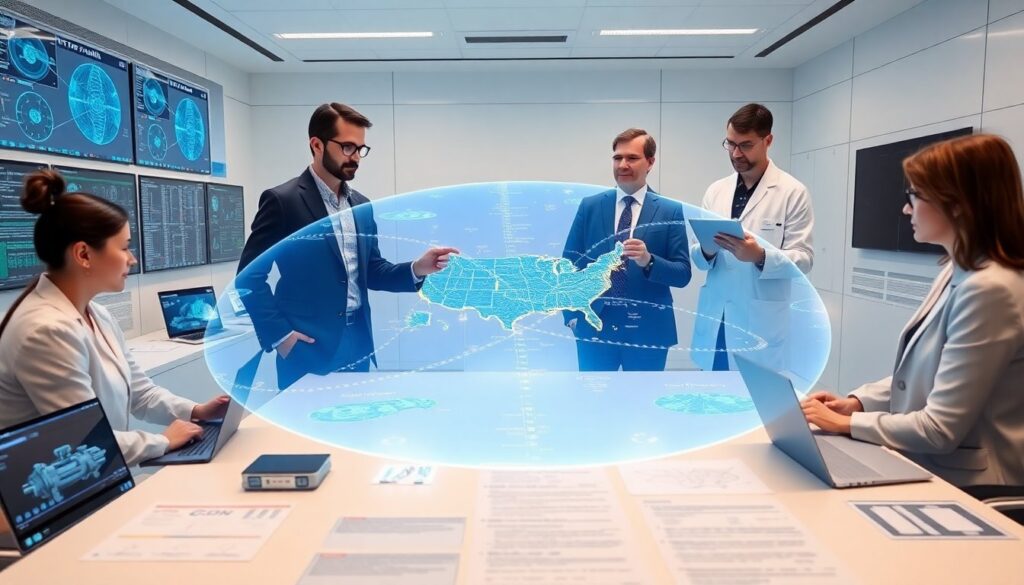
The team published new data on alien robotics alienmap of helectroalien starvaults in early 2026. The report shows mapped vault locations, robotic designs, and network behavior. The team used orbital scans, spectrum logs, and recovered drone firmware. The data reads like a catalog of machines, link nodes, and power cores. The report frames next steps for study and field teams.
Key Takeaways
- The alienmap of helectroalien starvaults provides detailed coordinates, robotic signatures, and vault functions, enabling safer and more targeted exploration missions.
- Alien robotics in the starvaults use modular designs, cloud-like coordination, and advanced energy tech, offering valuable models for resilient and efficient machine networks.
- Decoded drone firmware revealed self-repair and state management protocols, which can inform human research in decentralized control systems.
- The alienmap supports cross-disciplinary collaboration by sharing sanitized data, reducing risks and duplication in active exploration sectors.
- Insights from alien robotics suggest improvements for human tech, such as compact power cells and specialized accelerators for low-power robotics.
- Ethical considerations recommend transparency and oversight in interacting with alien systems, highlighting the alienmap’s role in shaping future policy and engineering guidelines.
What The HElectroAlien Starvaults Are And How The AlienMap Was Discovered
The kineticweave parallel universes by helectroverse dimensionpath are sealed orbital complexes that host machine clusters. Each vault houses processing arrays, energy conduits, and deployment bays. The team called the compiled navigation files the alienmap of helectroalien starvaults. The alienmap lists coordinates, transit corridors, and signature fingerprints for robotic units.
Researchers found the first vault by tracing repeated radio bursts in the sub-gigahertz band. A probe recorded encrypted telemetry near an asteroid belt. The probe then recovered fragments of a chassis with etched glyphs. Analysts decoded the glyphs into routing tables and added the results to the alienmap of helectroalien starvaults.
The mapping team crosschecked orbital models with thermal scans. The team validated vault locations by matching heat plumes and reflected spectra. The alienmap now contains verified positions and probable functions for each vault. The list shows logistics vaults, manufacturing vaults, and archive vaults.
Field teams extracted firmware from a disabled scouting drone. The firmware revealed simple state machines and self-repair routines. Engineers translated the routines and added node names to the alienmap of helectroalien starvaults. The map now links machine types to task sets and probable resource demands.
The discovery changed mission priorities. Commanders set rules for engagement, sample recovery, and data sharing. The team published sanitized portions of the alienmap to academic repositories. That release enabled cross-disciplinary review and reduced duplicate risk in active sectors.
Core Technologies Behind Alien Robotics In The Starvaults
The alien robotics inside the vaults use modular bodies and cloud-like coordination. Each robot holds a compute tile, an adaptive actuator, and a small power cell. The robots pair via low-latency links and share tasks with a leader election protocol.
The core compute runs a layered control stack. The lower layer manages sensors and actuators. The middle layer executes mission scripts and handles failures. The upper layer balances fleet roles and updates mission state across nodes. The update mechanism resembles delta patches and uses cryptographic signing.
The team found energy tech that differs from human designs. The vaults use high-efficiency capacitors and directed micro-beams. These components charge cells quickly and route power across arrays. The vaults also include passive radiators that shed waste heat to space.
The robots use vision suites that combine polarized imaging and spectral filters. The suites detect material properties and microfractures. The sensors feed a lightweight inference model that guides motion. The model runs on specialized accelerators that trade generality for efficiency.
The control fabric uses a message bus with prioritized lanes. The bus separates commands, telemetry, and update packets. That design reduces latency for critical commands and preserves bandwidth for logging. The architecture allows dispersed groups to act as a single system.
Researchers compared the alien protocols to human distributed systems and saw clear parallels. The team noted that some algorithms map directly onto fault-tolerant designs used in ground robotics. That overlap suggests reuse principles and convergent problem solving. The alienmap of helectroalien starvaults now includes protocol diagrams and suggested human testbeds for replication.
Implications For Exploration, Research, And Human Tech Development
The alienmap of helectroalien starvaults changes planning for exploration missions. Mission planners can avoid active corridors and target dormant vaults for study. The map also supports risk estimates for salvage and sample return. Agencies can assign containment measures and remote inspection windows.
Research teams gain test cases for machine resilience and decentralized control. Engineers can reproduce the alien message bus and the leader election rules in controlled labs. That approach will speed comparison studies and highlight efficiency gains.
For human tech development, the alien designs point to compact power and narrow-domain accelerators. Companies may adopt similar capacitor layouts and task-specific chips for low-power robotics. The design ideas could improve long-duration probes and off-world manufacturing bots.
The mapping report also raises policy questions about automation in public events and sports. Some experts point to fast, nonhuman adjudication as a related field. The Wimbledon electronic line calling report shows a path for replacing human roles with algorithmic systems in time-critical settings, and observers cite that example when they discuss automation limits in society (Wimbledon electronic line calling).
The vault data also affects media and entertainment that use synthetic agents. Broadcasters already experiment with a sports AI assistant to surface stats and narratives during live events (sports AI assistant). Those systems show how automated agents can augment human teams.
Ethics teams now consider rules for interacting with alien systems. The community recommends transparency in experiments and shared oversight on recovered code. The alienmap of helectroalien starvaults will remain a reference in future policy debates and engineering plans.
About The Author