KineticWeave Parallel Universes: Exploring Helectroverse’s DimensionPath (2026 Guide)
 Fyrconthius Lazenquill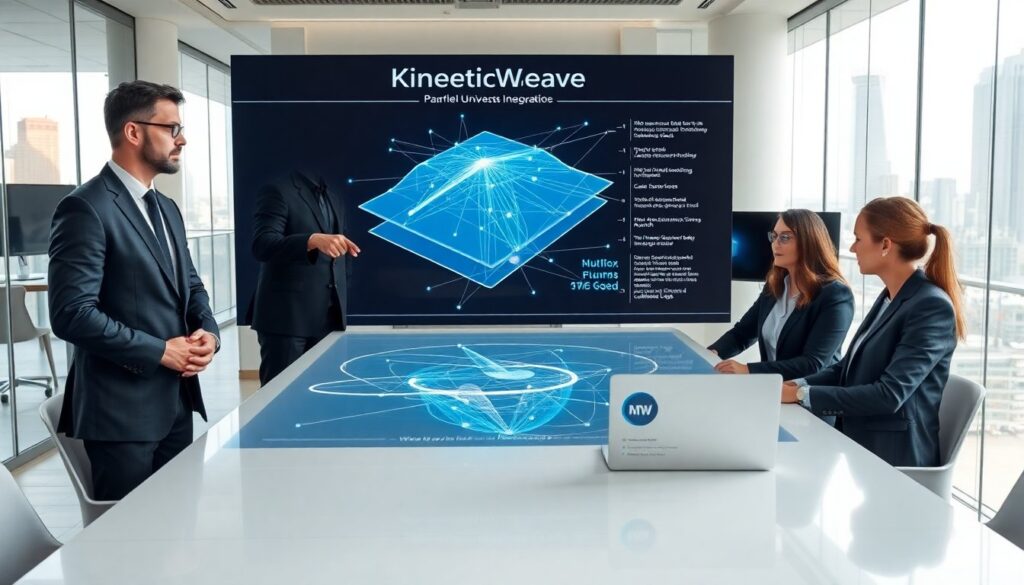
Helectromechatronical quilting fabricvault supercar stitchtrail process describe layered realities linked by energy currents. The concept frames portals as woven threads. It sets rules for movement, perception, and causality. This guide explains the core idea and the practical rules that creators and developers use when they build stories or systems with the concept.
Key Takeaways
- KineticWeave parallel universes by helectroverse dimensionpath model multiple timelines as intertwined energy strands with set rules for movement and causality.
- DimensionPath maps energy currents and gates between strands, rating paths by stability, energy cost, and time offset to guide safe transitions.
- Crossings require matching energy signatures, proportional flux for mass, and consider temporal offsets, leading to predictable costs and narrative tension.
- Developers and storytellers use the model for fast travel, worldbuilding, and plot devices while managing risks like state drift and narrative inconsistency.
- Implementing energy costs, cooldowns, and visible feedback prevents exploits, maintains fairness, and preserves story stakes in KineticWeave systems.
- Consistent design steps—defining energy metrics, signature rules, feedback, and crossing limits—ensure user trust and system reliability.
What KineticWeave Parallel Universes Are—Concept, Lore, And Core Principles
KineticWeave parallel universes by helectroverse dimensionpath present a model of multiple coexisting timelines. The model treats each timeline as a strand in a kinetic fabric. Helectroverse lore places sentient fields at intersections. These fields change local physics and alter cause-effect chains. Practitioners state three core principles. First, continuity holds within a strand. Second, energy flux allows limited crossing. Third, memory imprint can pass across thin seams.
The concept frames crossings as exchanges. Characters or data move where currents align. Helectroverse adds lore about guardians that stabilize seams. Storytellers use those guardians as plot devices. Developers use them as checkpoints or constraints. The KineticWeave model yields predictable rules for shifts. It also yields visible signs that a crossing occurred, such as interference patterns and residue echoes.
How Helectroverse’s DimensionPath Works
Helectroverse describes DimensionPath as a navigable layer built on kinetic flux. DimensionPath maps currents and gates. It provides pathways between parallel strands. The system rates paths by stability, energy cost, and temporal offset. Operators read the map and choose viable paths. Interfaces translate current data into visual cues. The design keeps transitions safe when users follow rules.
Core Mechanics And Energy Rules Behind KineticWeave
KineticWeave parallel universes by helectroverse dimensionpath run on a small set of mechanics. Energy flows along vectors. Nodes collect flux and set thresholds. When flux exceeds a node threshold, a transient gate opens. Agents pass if they match flux signature. The system enforces conservation: crossing consumes local flux and creates a recoil in adjacent strands.
Helectroverse sets three energy rules. Rule one: matching signature unlocks passage. Rule two: larger mass needs proportionally more flux. Rule three: higher temporal offset increases flux drain. Developers carry out these rules as formulas. Writers use the rules to create tension and cost. The rules also produce side effects. Side effects include echo artifacts and brief timeline bleed that observers can measure. In applied settings, designers add dampeners to limit bleed and reduce risk.
Uses, Risks, And Design Considerations For Developers And Storytellers
Creators use KineticWeave parallel universes by helectroverse dimensionpath for several purposes. They use the model to justify fast travel, for moral dilemmas, and for scalable worldbuilding. Game teams use the model to design level gating, resource sinks, and multiplayer sync logic. Writers use it to stage reveals and to explain unreliable memory.
The model carries risks. Crossings can break plot logic if creators ignore rules. Technical implementations can produce state drift in multiplayer systems. Designers must guard against exploits where users chain low-cost crossings to bypass progression. The recommended pattern is to assign clear energy costs and cooldowns. The pattern prevents loop abuse and keeps systems fair.
Ethical and narrative risks exist too. The model can trivialize character agency if creators allow easy resets. Storytellers must set clear stakes and visible costs. Developers must log crossings and provide rollback points. They must also test edge cases where flux interacts with other mechanics.
Practical design steps help mitigate risk. Step one: define energy metrics. Step two: set signature matching rules. Step three: add visual and audio feedback. Step four: cap crossing frequency and duration. These steps create predictable outcomes for users. They also help teams maintain player trust and narrative weight.
About The Author