Fake Rocket League Games: How to Spot Scams and Protect Your Gaming Account in 2026
 Fyrconthius Lazenquill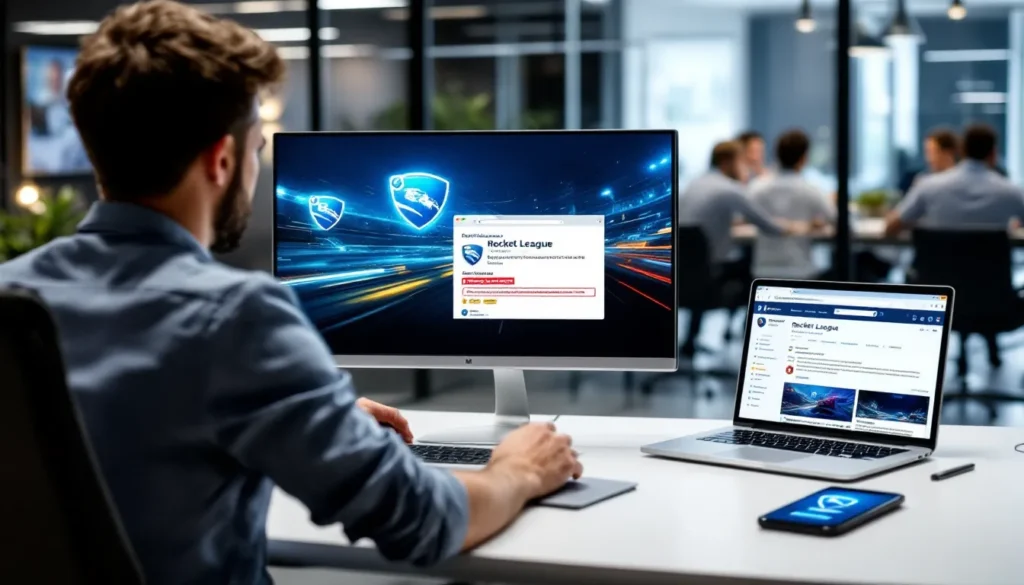
Rocket League’s massive player base, hovering around 70 million accounts since Epic Games acquired Psyonix, makes it prime real estate for scammers. The shift to free-to-play in 2020 only widened the attack surface. In 2026, fake Rocket League games are everywhere: sketchy mobile clones promising “Rocket League on Android,” phishing sites claiming to offer exclusive DLC, and malware-riddled downloads that harvest Steam credentials faster than you can say “What a save.”
The stakes? Your Epic Games account, inventory worth hundreds (or thousands) in tradable items, payment details, and potentially your entire system. Scammers bank on impatience and confusion, players searching for workarounds, mobile ports, or free item generators. This guide breaks down exactly what these scams look like, how to spot them before you click, and where to actually download Rocket League safely across every platform in 2026.
Key Takeaways
- Fake Rocket League games are everywhere in 2026—from counterfeit mobile apps and phishing websites to malware-infected installers—all designed to steal your Epic Games credentials, inventory worth hundreds of dollars, and personal data.
- Legitimate Rocket League downloads are only available through Epic Games Store (PC), Steam (legacy owners), official console stores, and Rocket League Sideswipe on mobile; anything else is a scam.
- Check the publisher (must be Psyonix/Epic Games), verify the download URL for typos (like ‘epicgames.co’ instead of ‘epicgames.com’), and look for red flags such as janky physics, low-res graphics, and spelling errors in fake games.
- If you’ve downloaded a fake Rocket League game, immediately change your Epic Games password, enable two-factor authentication, run a full antivirus scan, and contact Epic Games Support to review your account for unauthorized access.
- Protect yourself by bookmarking official sites, using a password manager for unique passwords, staying skeptical of offers promising free credits or item generators, and enabling 2FA on all gaming accounts.
What Are Fake Rocket League Games?
Fake Rocket League games are unauthorized copies, clones, or outright scams designed to impersonate the real game. They range from low-effort mobile knockoffs with stolen assets to sophisticated phishing operations that mirror Epic’s launcher interface.
Most fall into a few categories: counterfeit apps on third-party app stores, phishing websites masquerading as official download portals, malware-infected installers distributed via torrent sites or shady forums, and free-to-play impersonators that promise features the real game doesn’t offer (like mobile cross-play or exclusive items).
The common thread? They’re designed to steal something, your login credentials, payment info, in-game inventory, or system resources for cryptomining. Some are crude cash grabs packed with ads. Others are surgical credential harvesters built to hijack high-value accounts with rare items like Titanium White Octanes or alpha rewards.
What makes them dangerous is how convincing they can be. A fake “Rocket League Mobile” app might use official screenshots, replicate the UI, and even include gameplay footage ripped from YouTube. The developer name might be a single letter off from “Psyonix” or “Epic Games.” The URL might swap a zero for an ‘O.’ These aren’t always obvious at first glance.
Why Scammers Target Rocket League Players
Rocket League players are lucrative targets for three reasons: account value, player demographics, and the game’s accessibility.
First, inventory value. The trading economy is massive. Black Market decals, painted Zombas, and legacy crate items hold real-world value. Some accounts contain inventories worth $500+, tradable through grey-market sites or peer-to-peer. Scammers who phish credentials can liquidate items quickly or sell entire accounts.
Second, demographics. Rocket League skews younger than hardcore competitive shooters, with a significant slice of the player base under 18. Younger players are statistically more likely to fall for “free credits” scams or download unverified APKs promising mobile versions.
Third, accessibility and confusion. Rocket League is free-to-play and available on PC (Epic Games Store, Steam), PlayStation, Xbox, and Nintendo Switch, but not officially on mobile (as of 2026, Sideswipe is the only mobile Psyonix title, and it’s a different game). This gap creates demand. Players searching “Rocket League Android download” or “Rocket League iOS” land on scam sites that exploit that confusion.
Scammers also leverage Rocket League’s social features. Trading, party invites, and tournament links become vectors for phishing. A fake “tournament registration” site asks you to log in with your Epic account, boom, credentials harvested.
The Most Common Types of Fake Rocket League Games
Counterfeit Mobile Apps and Clones
The mobile space is a minefield. Search “Rocket League” on third-party Android app stores or even sketchy corners of the Google Play Store (before takedowns), and you’ll find dozens of clones. Titles like “Rocket Car League,” “Turbo League,” or straight-up “Rocket League” with a fake publisher name.
These apps fall into two camps: ad-farm clones (low-quality knockoffs monetized with intrusive ads, designed to generate revenue without stealing data directly) and credential thieves (apps that prompt you to “link your Epic account” or “log in to sync progress”). The latter is the real threat. Once you enter credentials, they’re sent to a remote server.
Some clones are surprisingly polished, using Unity or Unreal Engine to approximate Rocket League’s physics. They’re still unauthorized, often violate trademarks, and many include hidden data collection or ad SDKs that harvest device info.
Phishing Websites Disguised as Official Downloads
These sites rank surprisingly well on Google for terms like “Rocket League download PC free” or “Rocket League offline installer.” They mimic Epic’s branding, complete with logos, color schemes, and fake download buttons.
The flow: You land on the site, click “Download,” and get redirected through multiple ad pages (generating revenue for the scammer). Eventually, you download a .exe or .zip. That file is either a trojan, a cryptominer, or a password stealer like RedLine or Vidar, both popular infostealer malware families circulating in 2025-2026.
Some phishing sites don’t deliver malware at all. Instead, they ask you to “verify your Epic account” to access the download. You enter credentials on a fake login form, and they’re logged server-side. According to ongoing research into gaming scams, credential phishing remains the #1 method for account takeovers.
Malware-Infected Game Files and Mods
Torrent sites and file-sharing forums host “cracked” versions of Rocket League. Since the game went free-to-play in 2020, there’s no rational reason to pirate it, but scammers still package malware as “Rocket League + All DLC Unlocker” or “Rocket League Mod Menu.”
These archives often contain trojans (remote access tools like Remcos or AsyncRAT), cryptominers (using your GPU to mine Monero while you play), or infostealers that scrape browser cookies, saved passwords, and Steam/Epic session tokens.
Mod files are another vector. A fake BakkesMod plugin or custom map file shared on Discord or Reddit might include a script that executes on launch. BakkesMod itself is safe (it’s a widely trusted modding platform for Rocket League training and cosmetics), but impostors exist.
Free-to-Play Impersonators on Third-Party Platforms
These are browser-based or standalone games hosted on sketchy game portal sites. They advertise as “Play Rocket League Online Free, No Download.” and deliver a janky .io-style car game with Rocket League’s name slapped on.
The danger here isn’t always direct malware. It’s data harvesting (tracking cookies, device fingerprinting, email collection for spam lists) and ad fraud (malicious ad networks that can deliver drive-by malware or redirect to phishing sites). Some of these portals have been flagged by browser security features, but users who disable blockers or use outdated browsers are at risk.
How to Identify a Fake Rocket League Game
Check the Publisher and Developer Information
Rocket League is developed by Psyonix and published by Epic Games. That’s it. No other entity is authorized to distribute the game. If the app store listing, website footer, or installer metadata shows any other name, even close variants like “Psyonix Studios” or “Epic Gaming”, it’s fake.
On mobile, legitimate Rocket League content is limited to Rocket League Sideswipe (published by Psyonix, available on iOS and Android). Anything claiming to be “Rocket League” (the full PC/console experience) on mobile is a scam.
On PC, the only legitimate storefronts are the Epic Games Store (primary) and Steam (legacy: new players are directed to Epic, but existing Steam copies still update). If a site offers a “standalone installer” or “direct download,” it’s not official.
Verify Download Sources and Platform Legitimacy
Legitimate download sources in 2026:
- PC: Epic Games Launcher (epicgames.com) or Steam (for existing owners)
- PlayStation: PlayStation Store (PS4/PS5)
- Xbox: Microsoft Store (Xbox One, Series X
|
S, Windows)
- Nintendo Switch: Nintendo eShop
- Mobile: Only Rocket League Sideswipe via Apple App Store or Google Play
Before downloading, check the URL. Phishing sites use typosquatting: epicgames.co, epic-games.com, rocketleague-download.com. The official Epic Games domain is epicgames.com (no hyphen, no alternate TLD).
For mobile apps, verify the developer name in the app store. On Google Play, tap the developer name, it should link to an official Psyonix page with a verified badge and other published titles.
Look for Red Flags in Graphics and Gameplay
If you’re evaluating a game already installed or watching a trailer, quality is a tell. Rocket League runs on Unreal Engine 3 (upgraded to UE5 features in recent patches). It has polished physics, licensed car models (like the Batmobile and McLaren 570S), and consistent UI design.
Fake games show:
- Janky physics: Cars that feel floaty, unresponsive, or clip through the ball
- Low-res textures: Blurry arena floors, pixelated decals, or placeholder assets
- Mismatched UI: Fonts, menu layouts, or button styles that don’t match official screenshots
- Missing licensing: No real car brands, no official esports team decals (fake games can’t license these)
- Spelling errors: Typos in menus, item names, or splash screens
Gameplay footage from a rocket league off brand will often look close but wrong, like cars that don’t flip correctly, or a ball that bounces inconsistently. If you’ve played the real game, your gut will tell you something’s off.
Review User Ratings and Community Feedback
Scam apps on third-party stores often have inflated 5-star ratings with generic reviews (“Great game.”, “Love it.”, “Best soccer game.”) posted in clusters. Conversely, legitimate user reviews mention specific features, bugs, or updates.
Check Reddit, Discord, or Twitter. Search “[app name] scam” or “[app name] fake.” Gaming communities are quick to call out imposters. If you find threads warning against a download, trust them.
For websites, plug the domain into VirusTotal or URLVoid. These services aggregate security vendor data and show if a URL has been flagged for malware or phishing. Gaming outlets like IGN and Game Informer occasionally publish warnings about trending scams, stay plugged in.
The Dangers of Downloading Fake Rocket League Games
Account Theft and Credential Harvesting
This is the endgame for most scams. You enter your Epic account email and password into a fake launcher or “account sync” prompt. The scammer logs in, changes the password and email, enables two-factor authentication with their own device, and locks you out.
From there, they liquidate your inventory. High-value items are traded to alt accounts or sold on grey-market sites. Some scammers hold accounts for ransom, demanding payment to return access. Others simply abandon the account after cleaning it out.
Epic’s account recovery process can take days or weeks. Even if you regain access, items traded away are rarely restored, Epic’s policy treats trades as final unless fraud is conclusively proven.
Malware, Ransomware, and System Compromise
Infostealer malware like RedLine doesn’t just grab Rocket League credentials. It scrapes:
- Browser autofill data (addresses, credit cards)
- Saved passwords (email, banking, social media)
- Session cookies (allowing attackers to hijack logged-in accounts without passwords)
- Cryptocurrency wallet files
- Discord tokens (for spreading scams to your friends)
Some fake installers deploy ransomware, encrypting your files and demanding Bitcoin payment for the decryption key. Others install cryptominers that throttle your GPU, causing overheating, stuttering in games, and long-term hardware damage.
Remote access trojans (RATs) give attackers full control: webcam access, keylogging, file browsing. They can install additional payloads, steal files, or use your PC as a bot in a DDoS network.
Loss of In-Game Items and Currency
Even if you catch the breach early, item loss is often irreversible. Rocket League’s trading system is peer-to-peer and decentralized. Once items leave your inventory, Epic can’t roll them back without clear evidence of unauthorized access.
Credits purchased with real money might be spent on in-game items or traded away. If the scammer uses your saved payment method to buy more credits, you’ll need to dispute charges with your bank, and Epic may lock your account pending investigation.
Legacy items (alpha rewards, beta nuggets, original crate items) are especially targeted. These can’t be re-earned and have significant collector value. Losing an alpha boost or Goldstone wheels is a financial hit measured in hundreds or thousands of dollars on the grey market.
Where to Safely Download Rocket League in 2026
Official Platforms for PC, Console, and Mobile
Here’s the exhaustive list of legitimate sources:
PC:
- Epic Games Store (primary): Download the Epic Games Launcher from epicgames.com, install, create/log into your account, search for Rocket League, and install. It’s free.
- Steam (legacy): If you owned Rocket League on Steam before it went free-to-play in September 2020, you still have access. New players can’t acquire it on Steam, Epic Games Store is required.
Console:
- PlayStation 4/5: PlayStation Store. Search “Rocket League,” download.
- **Xbox One/Series X
|
S:** Microsoft Store. Available via console or the Xbox app on Windows.
- Nintendo Switch: Nintendo eShop. Free download, requires Nintendo Account.
Mobile:
- Rocket League Sideswipe (iOS/Android): A distinct mobile game (2D perspective, touch controls) developed by Psyonix. Available on Apple App Store and Google Play. This is not the full Rocket League experience, it’s a separate title optimized for mobile. As of 2026, the main Rocket League game is not available on mobile.
Anything outside these sources is unauthorized. No APK download sites, no “mobile port” installers, no browser-based “play now” buttons.
Verified Mobile App Stores and Regional Availability
For Rocket League Sideswipe, stick to:
- Apple App Store (iOS): Search “Rocket League Sideswipe.” Developer should show “Psyonix LLC.”
- Google Play (Android): Same search. Developer: “Psyonix Studios.” Verify the green checkmark next to the name.
Sideswipe is available in most regions (NA, EU, Asia-Pacific, Latin America). If it’s not available in your country’s app store, do not sideload an APK from a third-party site. You’re risking malware. Instead, wait for official regional expansion or use a VPN with a secondary account (though this violates some ToS and isn’t recommended).
Third-party Android stores, APKPure, APKMirror, Aptoide, are not endorsed by Psyonix. Even if an APK is “clean,” you won’t receive official updates, and you’re training yourself to trust unverified sources. Don’t.
What to Do If You’ve Downloaded a Fake Rocket League Game
Immediate Steps to Secure Your Account
- Change your Epic Games password immediately. Go to epicgames.com, log in (if you still can), and update your password. Use a unique, strong password (16+ characters, mix of letters/numbers/symbols).
- Enable two-factor authentication (2FA). Epic supports authenticator apps (Authy, Google Authenticator) and email-based 2FA. Enable it under Account Settings > Password & Security.
- Check active sessions. In your Epic account settings, review connected devices and sign out any you don’t recognize.
- Review recent trades and purchases. Check your inventory and transaction history. Note anything missing or suspicious.
- Contact Epic Games Support. Submit a ticket at epicgames.com/help. Explain the situation, attach screenshots of the fake app/site, and request an account security review.
If you’ve lost access entirely (password changed, email changed), start the account recovery process immediately. You’ll need to verify identity with original email, payment receipts, or account creation details.
Removing Malicious Software and Files
If you downloaded an installer or APK:
- Disconnect from the internet. Unplug Ethernet or disable Wi-Fi to prevent further data exfiltration.
- Uninstall the fake game. On Windows, go to Settings > Apps, find the suspicious program, uninstall. On Android, long-press the app icon, select Uninstall.
- Run a full antivirus scan. Use Windows Defender (built-in, effective against most threats), Malwarebytes (free version is solid for one-off scans), or Bitdefender. Scan in Safe Mode if possible.
- Check browser extensions. Malware sometimes installs malicious extensions. In Chrome/Edge, go to
chrome://extensionsand remove anything unfamiliar. - Change passwords system-wide. If an infostealer ran, assume all saved credentials are compromised. Update passwords for email, banking, social media, and game accounts. Use a password manager (Bitwarden, 1Password) going forward.
- Monitor financial accounts. Check bank and credit card statements for unauthorized charges. Consider a fraud alert or credit freeze if you suspect card info was stolen.
On mobile, a factory reset is the nuclear option, if you can’t confirm the malware is removed, wipe the device and restore from a clean backup.
Reporting Scams to Epic Games and Authorities
Report the scam through multiple channels:
- Epic Games: epicgames.com/help > “Report a Player or Content.” Include URLs, app names, screenshots, and any communication with scammers.
- Google/Apple: If the fake app was on an official store, report it. On Google Play, open the app listing, tap the three dots, select “Flag as inappropriate.” On iOS, scroll down on the app page and tap “Report a Problem.”
- Federal Trade Commission (FTC, US): reportfraud.ftc.gov. Useful for phishing sites and financial fraud.
- Internet Crime Complaint Center (IC3, US): ic3.gov. For malware distribution and identity theft.
- Your country’s cybercrime unit: UK: Action Fraud. EU: Europol’s cybercrime reporting. Australia: ReportCyber. Canada: Canadian Anti-Fraud Centre.
Reporting helps take down scam infrastructure and warns other players. The more reports a fake app or site gets, the faster platforms act.
Protecting Yourself from Future Gaming Scams
Prevention beats remediation. Here’s how to stay safe:
1. Bookmark official sites. Add epicgames.com, rocketleague.com, and your console’s store to your browser bookmarks. Always access them directly, never via search results or email links.
2. Enable 2FA everywhere. Epic, Steam, PlayStation Network, Xbox Live, enable two-factor authentication on every gaming account. Authenticator apps are more secure than SMS.
3. Use a password manager. Reusing passwords is how credential leaks from one breach snowball into multi-account takeovers. A password manager (Bitwarden, 1Password, Dashlane) generates and stores unique passwords for every site.
4. Stay skeptical of “too good to be true” offers. Free credits, item generators, exclusive DLC codes sent via DM, they’re all scams. Rocket League’s in-game economy is closed. There’s no legitimate way to generate credits outside of purchasing or earning through Rocket Pass.
5. Verify before you download. Cross-reference any download against official sources. If a friend shares a “cool mod,” ask where they got it. Check BakkesMod’s official site or Rocket League’s modding community on Reddit before installing anything.
6. Keep software updated. Enable automatic updates for your OS, browser, and antivirus. Most malware exploits known vulnerabilities that patches have already fixed.
7. Educate younger players. If you’re a parent or older sibling, talk to younger gamers about phishing, fake apps, and why they should never share account credentials, even with “friends” online.
8. Monitor third-party logins. Periodically review which apps/sites have access to your Epic account (Account Settings > Connections). Revoke any you don’t recognize.
9. Use official communities for help. Reddit’s r/RocketLeague, Rocket League’s Discord, and the official support site are safer than random forums or Discord servers promising “hacks” or “free items.”
10. Trust your instincts. If something feels off, a sketchy download link, a stranger offering a “trade middleman” service, a site that looks slightly wrong, walk away. The few minutes you save aren’t worth the risk.
Conclusion
Fake Rocket League games aren’t going anywhere. As long as there’s demand for mobile ports, free items, or quick downloads, scammers will supply rocket league fake lookalikes designed to steal credentials, push malware, or harvest data. The 2026 landscape is crowded with counterfeit mobile apps, phishing sites, and malware-infected installers, all banking on player impatience or confusion.
Your defense is simple: verify sources, question offers that sound too good, and keep 2FA enabled. Stick to the Epic Games Store, official console storefronts, and Rocket League Sideswipe on mobile. Anything else is a risk you don’t need to take.
If you’ve already been hit, act fast, change passwords, scan for malware, contact Epic support, and report the scam. The faster you move, the better your chances of minimizing damage. And if you’re helping a friend or younger player navigate this minefield, share what you’ve learned. The best defense against scams is a community that knows what to watch for.
About The Author