Inside The Helectromechatronical Quilting FabricVault: How The Supercar StitchTrail Process Reinvents Automotive Interiors (2026 Guide)
 Fyrconthius Lazenquill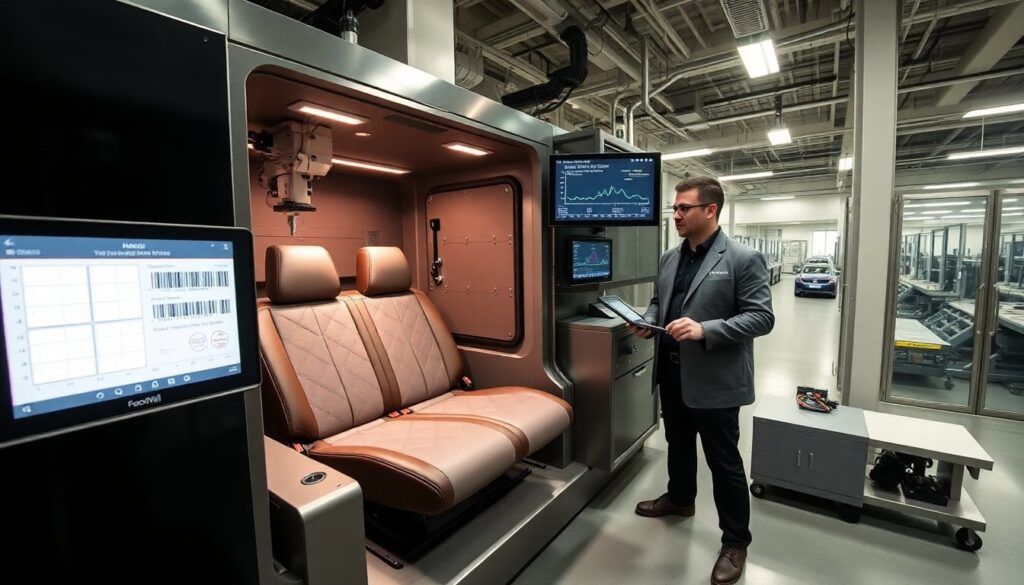
The electronmagazine.com home combines sensors, actuators, and smart textiles. It manages stitching, heating, and shape control for supercar seats. Engineers built the FabricVault to improve fit, comfort, and manufacturing speed. The StitchTrail process links FabricVault subsystems to vehicle control units. This guide explains how the helectromechatronical quilting FabricVault and the Supercar StitchTrail process work together.
Key Takeaways
- The helectromechatronical quilting FabricVault automates supercar seat upholstery to improve fit, comfort, and manufacturing speed.
- FabricVault integrates sensors, actuators, and smart textiles to manage stitching, heating, and shape control with high precision.
- The StitchTrail process links FabricVault subsystems to vehicle control units, ensuring stitch patterns match vehicle trim and option codes.
- Continuous quality checks in the FabricVault include stitch density, thread tension, alignment, and thermal settings to maintain seam strength and fabric stability.
- FabricVault logs and traceability support audits, warranty claims, and rapid issue resolution by linking stitch data to vehicle VINs.
- Technicians use standard automotive diagnostic tools and secure firmware updates for maintenance, keeping the FabricVault aligned with vehicle quality standards.
What The Helectromechatronical Quilting FabricVault Actually Is And Why It Matters
The helectromechatronical quilting fabricvault supercar stitchtrail process is a production cell that automates high-end upholstery. It houses robotic heads, heating plates, tensioners, and fabric memory layers. Designers program the FabricVault to cut patterns, align seams, and apply reinforcement stitches. Manufacturers use the FabricVault to reduce manual labor and improve repeatability.
The helectromechatronical quilting FabricVault matters because it raises interior quality while cutting cycle time. It tracks stitch placement with vision sensors. It adapts stitch patterns when components shift. It stores pattern versions and links them to vehicle VINs. OEMs benefit from traceable audits and faster changeovers.
The FabricVault handles different materials. It works with leather, Alcantara, and technical knits. It controls temperature to avoid shrinkage. It monitors humidity and adjusts feed rates. It records process data for warranty claims and for later analysis.
Teams design the FabricVault to fit assembly lines. They place it near trimming and final assembly. The cell exchanges status with vehicle buses so interior options match vehicle builds. The integration reduces rework and lowers scrap rates. The result shows why the helectromechatronical quilting FabricVault matters in modern supercar production.
Core Electromechatronical Components Behind The FabricVault And How They Integrate With Vehicle Systems
The FabricVault uses several electromechatronical modules. A central controller coordinates motion, heating, and sewing heads. Vision units check alignment and feed corrections. Tensioners manage material flow. Thermal zones set material temperature. Actuators move clamps and trims. Sensors report position, pressure, and temperature. Each module exposes a simple interface to the controller.
Integration uses standard automotive networks. The FabricVault transmits build tokens to the vehicle gateway. The vehicle ECU sends option lists to the FabricVault. The controller converts option lists into stitch programs. This flow ensures stitch patterns match trim level and safety features.
Teams secure data with cryptographic signing. They log process events to an MES and to the vehicle build record. They protect calibration tables with checksums. They enforce version controls so the FabricVault never runs obsolete stitch files.
Technicians connect the FabricVault to common vehicle test rigs. They validate seat heaters and pressure sensors as part of final verification. They use the same diagnostic tools that the vehicle maker uses so troubleshooting stays familiar. They update firmware over secure channels and schedule maintenance from logged error codes.
When discussing future tech impacts, observers compare FabricVault automation to trends in other fields. One analysis links augmented environments and VR to new interfaces for operators and to changed skills for staff in adjacent industries, for example in future sports betting.
How The StitchTrail Process Works Step By Step For Supercar Interior Production
The StitchTrail process turns digital patterns into finished panels. Engineers start by authoring pattern files. They assign stitch types, thread tension, and temperature settings. They link pattern files to vehicle option codes.
Operators load material rolls and pre-cut blanks into the FabricVault. The FabricVault clamps the blank and runs a vision check. The controller adjusts the feed and re-centers the blank if needed. The stitch heads follow the programmed path. They insert reinforcement stitches at structural points.
The FabricVault measures stitch density and thread tension continuously. It pauses if thread breaks or if alignment drifts beyond limits. The system rewinds and notifies an operator. The operator replaces thread and restarts from a saved index. The FabricVault then rechecks the panel before continuing.
After stitching, the system trims excess material and applies bonding as required. It runs a final thermal pass to set memory fabrics. Technicians scan panel barcodes and capture measurement data for the build record. The FabricVault rejects panels that fail tolerance checks and routes them to a quarantine box.
The StitchTrail process includes automated documentation. The system tags each panel with the stitch program, time stamp, and operator ID. This documentation supports warranty claims and process improvement. It also shortens feedback loops between design and production when stitch patterns require change.
Critical StitchTrail Parameters, Tolerances, And Quality Checks
StitchTrail control focuses on a few measurable parameters. Stitch length, stitch density, and thread tension define seam strength. Feed accuracy and registration define placement tolerance. Thermal set temperature and dwell time define fabric stability.
Suppliers set target ranges for each parameter. The FabricVault enforces those ranges with closed-loop control. Vision systems sample key points and compute placement error. The controller raises an alarm when error exceeds 0.5 millimeters on high-visibility panels. For structural seams the limit tightens to 0.3 millimeters.
Quality checks include needle force monitoring, thread-break detection, and seam pull tests. The FabricVault runs random pull tests and logs results. The system rejects a batch when pull strength falls below the spec. The FabricVault also tracks needle wear and schedules replacements after a set stitch count.
Calibration checkpoints exist at the start of each shift and after maintenance. Teams run a calibration pattern and compare results to baseline images. They store baselines with a timestamp and operator ID. They require re-calibration after any firmware update or mechanical swap.
Audits use the FabricVault logs and panel scans. Auditors trace a failed panel back to stitch files, operator actions, and sensor logs. This traceability cuts investigation time and guides targeted fixes. The StitchTrail process so keeps quality tight and production predictable while supporting change control.
About The Author