LEGO Rocket League: Everything You Need to Know About the Epic Collaboration in 2026
 Fyrconthius Lazenquill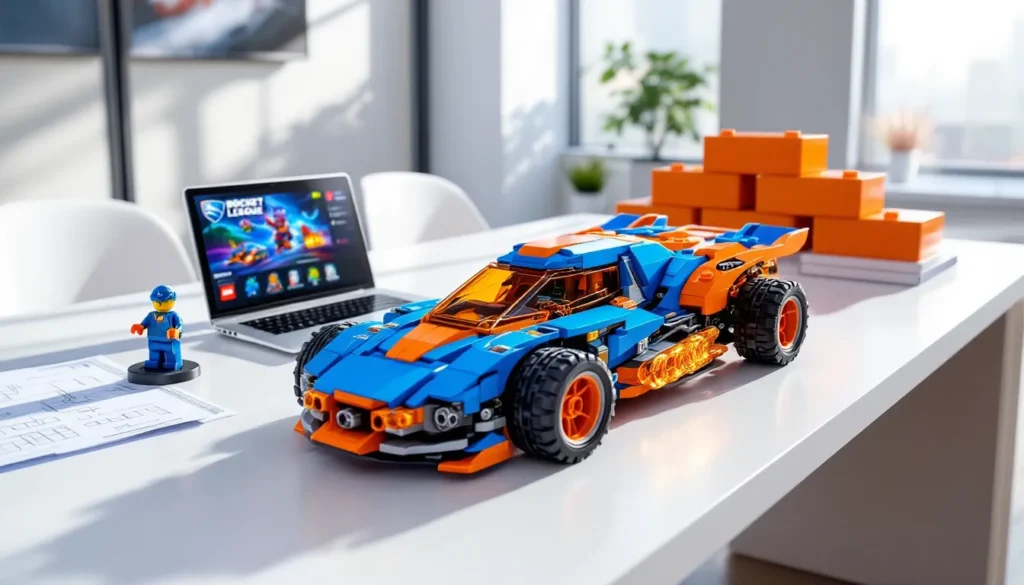
When two giants of their respective worlds collide, the result is usually something special. LEGO and Rocket League brought together the physical joy of brick-building with the high-octane chaos of car soccer, and the gaming community went wild. Whether you’re hunting for official sets to display on your shelf, unlocking exclusive in-game cosmetics, or planning your next MOC build, this collaboration has something for everyone. Since its announcement, LEGO Rocket League has expanded into a full ecosystem of physical products, digital content, and fan-driven creativity. This guide breaks down everything you need to know in 2026, from set details and pricing to in-game unlocks and what’s next for this partnership.
Key Takeaways
- LEGO Rocket League merges physical building with digital gaming, offering vehicle sets, arena builds, and exclusive in-game cosmetics that reward both collectors and competitors.
- Physical LEGO Rocket League sets include unique redemption codes that unlock exclusive in-game items, making official sets valuable for cosmetic collectors beyond their display appeal.
- Custom MOC (My Own Creation) LEGO cars are achievable for fans with essential pieces like slopes, curved panels, and Technic connectors, allowing builders to recreate iconic Rocket League vehicles.
- Limited-edition LEGO Rocket League products like the RLCS Trophy Set sell out quickly and command high resale prices ($300–$450), making early purchases through official retailers crucial.
- Wave 4 sets are confirmed for late 2026 with rumors of motorized app-controlled vehicles and expanded in-game events, signaling the collaboration’s continued growth and innovation.
What Is LEGO Rocket League?
LEGO Rocket League is a licensing collaboration between LEGO Group and Psyonix that merges the physical world of buildable bricks with Rocket League’s competitive vehicular gameplay. The partnership launched official LEGO sets featuring Rocket League’s iconic vehicles and arenas, alongside digital in-game items that mirror the aesthetic of LEGO construction.
The collaboration isn’t just about slapping a logo on a box. Each LEGO set is designed to capture the kinetic energy of Rocket League matches, explosive boosts, mid-air flips, and gravity-defying goals. Vehicles like the Octane and Dominus are recreated in brick form with articulated wheels and buildable boost trails. On the digital side, players can unlock LEGO-themed car bodies, decals, and accessories within Rocket League itself.
What makes this partnership unique is its two-way nature. Physical LEGO sets come with codes to unlock exclusive in-game items, while in-game events occasionally reward players with digital versions of real LEGO sets. It’s a seamless loop that rewards both collectors and competitors.
The target audience spans multiple demographics: hardcore Rocket League players who want to showcase their fandom, LEGO enthusiasts drawn to the unique vehicle designs, and parents looking for gaming-adjacent gifts that encourage hands-on creativity. By 2026, the line has matured into one of LEGO’s most successful gaming collaborations, sitting alongside franchises like Mario and Minecraft.
The History Behind the LEGO and Rocket League Partnership
When the Collaboration Was Announced
The LEGO Rocket League partnership was officially unveiled in June 2024 during the Rocket League Championship Series (RLCS) Spring Major. Psyonix and LEGO Group dropped a surprise trailer showcasing the first wave of sets, generating immediate hype across social media. The announcement came at a pivotal moment, Rocket League had surpassed 150 million players globally, and LEGO was actively expanding its gaming portfolio beyond traditional franchises.
The first physical sets hit shelves in October 2024, timed with Rocket League’s Season 12 launch. That same update introduced the initial batch of LEGO-themed cosmetics, creating a synchronized launch that rewarded both physical collectors and digital-only players. The collaboration was a commercial success from day one, with several sets selling out within weeks.
By early 2025, LEGO confirmed a second wave of products, including larger stadium sets and limited-edition vehicles tied to esports events. The partnership has since expanded to include collaborations with professional RLCS teams, offering exclusive team-branded LEGO builds.
Why LEGO and Rocket League Are a Perfect Match
On the surface, LEGO and Rocket League might seem like an odd pairing. But dig deeper and the synergy becomes obvious. Both brands emphasize creativity, customization, and modularity. Rocket League’s entire progression system revolves around unlocking and mixing car parts, bodies, decals, wheels, boosts, to create a unique visual identity. LEGO operates on the same principle: take standardized bricks and build something entirely your own.
The aesthetic overlap is equally strong. Rocket League’s vehicles are chunky, angular, and stylized, perfect for translation into LEGO’s brick-based design language. The game’s arenas, with their neon lighting and geometric structures, mirror the bold color palettes and architectural logic of LEGO sets.
From a business perspective, the collaboration taps into two lucrative markets: adult LEGO collectors (a rapidly growing segment) and the esports audience. Rocket League’s player base skews younger than many competitive games, making it an ideal gateway for introducing teens and young adults to premium LEGO sets. Meanwhile, LEGO’s brand recognition gives Rocket League another avenue for mainstream visibility beyond gaming circles.
Both companies also share a commitment to community-driven content. LEGO Ideas has long crowdsourced fan designs, while Rocket League regularly highlights player creations through in-game showcases. This ethos of co-creation makes the partnership feel organic rather than purely transactional.
All LEGO Rocket League Sets: A Complete Breakdown
Official LEGO Rocket League Vehicle Sets
As of March 2026, LEGO has released 12 official vehicle sets spanning three product waves. These sets range from compact, budget-friendly builds to complex, display-worthy models. Here’s the full lineup:
Wave 1 (October 2024):
- LEGO Rocket League Octane (Set 76240, 204 pieces): The franchise’s most popular car, featuring buildable boost flames and a rotating antenna topper. Includes a minifig-scale soccer ball and goal post.
- LEGO Rocket League Dominus (Set 76241, 198 pieces): The Dominus in classic blue and orange colorways, with swappable decal tiles.
- LEGO Rocket League Fennec (Set 76242, 215 pieces): Introduced after community demand. Features a bulkier build and gull-wing door details.
Wave 2 (Spring 2025):
- LEGO Rocket League Breakout (Set 76250, 187 pieces): A sleek, low-profile build with chrome-finish wheels.
- LEGO Rocket League Batmobile (Set 76251, 289 pieces): A licensed crossover within a crossover. Based on the 1989 Batmobile DLC car, this set includes extended turbine boosters.
- LEGO Rocket League Titanium White Octane (Set 76252, 204 pieces): A premium variant with pearl-white bricks and metallic accents. Originally a LEGO Store exclusive.
Wave 3 (Fall 2025 – Present):
- LEGO Rocket League Merc (Set 76260, 223 pieces): A chunky van-style build with opening rear doors.
- LEGO Rocket League Takumi RX-T (Set 76261, 241 pieces): Features exposed engine detailing and neon underglow tiles.
- LEGO Rocket League Esports Champion Pack (Set 76262, 310 pieces): Includes three miniaturized vehicles (Octane, Dominus, Fennec) in championship gold with team decals from G2 Esports, Team Vitality, and FURIA.
Each set includes at least one unique in-game item code. Larger sets come with multiple unlock codes for decals, wheels, or boost trails.
Arena and Stadium Building Sets
Beyond vehicles, LEGO has released four arena-themed sets that recreate Rocket League’s iconic playing fields:
- LEGO Rocket League DFH Stadium (Set 76270, 1,147 pieces): The classic map in modular form. Features light-brick boost pads, goal explosions with translucent flame pieces, and a removable roof section. Compatible with all vehicle sets. Released November 2024.
- LEGO Rocket League Neon Fields (Set 76271, 892 pieces): A smaller, budget-friendly arena with cyberpunk aesthetics. Includes UV-reactive bricks and a soundtrack brick that plays in-game music when pressed. Released May 2025.
- LEGO Rocket League Champions Field (Set 76272, 1,634 pieces): The largest and most detailed set. Includes crowd seating, jumbotron displays, and a motorized ball launcher. Released October 2025 as a premium collectible set aimed at adult builders.
- LEGO Rocket League Urban Central (Set 76273, 753 pieces): Features a street-style arena with graffiti-printed tiles and modular ramp sections. Released January 2026.
All arena sets are designed to connect with each other, allowing builders to create custom hybrid fields.
Limited Edition and Exclusive Sets
LEGO and Psyonix have released several limited runs tied to in-game events and real-world competitions:
- RLCS World Championship Trophy (Set 76280, 412 pieces): A replica of the RLCS trophy, released exclusively at the 2025 World Championship in Dallas. Limited to 2,500 units.
- Golden Egg Mystery Box (Set 76281, variable pieces): A blind-bag series with randomized vehicle parts, rare decals, and chrome accessories. Released seasonally.
- Rocket League x LEGO Ideas: Community Car (Set 76282, 267 pieces): A fan-designed vehicle selected through LEGO Ideas in late 2024. Profits donated to Code.org.
- Black Market Decal Collection (Set 76283, 156 pieces): A parts pack with rare holographic and color-shift decal tiles, sold exclusively through the LEGO website.
Limited sets typically sell out fast and command high resale prices. The RLCS Trophy set, for example, now averages $350–$450 on secondary markets even though its original $79.99 retail price.
LEGO Rocket League In-Game Content and Cosmetics
How to Unlock LEGO-Themed Items in Rocket League
Unlocking LEGO content in Rocket League happens through three primary methods:
-
Physical Set Redemption Codes: Every LEGO Rocket League set includes at least one unique code printed on a card inside the box. Redeem codes via the Rocket League main menu under Extras > Redeem Code. Codes are platform-agnostic and tied to your Epic Games account, so they work across PC, PlayStation, Xbox, and Switch.
-
In-Game Events: Psyonix runs seasonal LEGO-themed events roughly every four months. These events feature special challenges (e.g., “Score 50 goals with the Octane”) that reward LEGO cosmetics. Event items are typically time-limited but occasionally return in the Item Shop.
-
Item Shop Purchases: Select LEGO items rotate through the in-game Item Shop for Credits. Prices range from 300 Credits for decals to 2,000 Credits for full car bundles. Shop rotations are unpredictable, but LEGO items tend to appear every 3-4 weeks.
All LEGO items are purely cosmetic, no gameplay advantages. But, they’re account-bound and cannot be traded between players, making physical set codes especially valuable to collectors.
Available LEGO Car Designs and Decals
As of March 2026, Rocket League features eight LEGO-exclusive car bodies and over 30 LEGO-themed decals. Key highlights:
LEGO Car Bodies:
- LEGO Octane: The flagship body, available via the physical Octane set code or a 1,200 Credit Item Shop bundle.
- LEGO Dominus: Slightly boxier than the standard Dominus, with visible brick seams.
- LEGO Fennec: Features stud detailing along the roof and sides.
- LEGO Batmobile: Identical hitbox to the licensed Batmobile but with brick textures.
- LEGO Breakout, Merc, Takumi RX-T: Released throughout 2025 via set codes and events.
- LEGO Block Hauler: An original design exclusive to the 2025 Winter Event, resembling a brick-built truck.
LEGO Decals:
Decals are applied to LEGO bodies and feature designs like:
- Brick Pattern (common): Simple stud texture overlay.
- Rainbow Gradient (rare): Color-shifting tiles that change based on viewing angle.
- Master Builder (very rare): Holographic blueprint-style design.
- Constructicon (import): Animated decal showing bricks assembling in real-time.
Decals earned from physical sets are often exclusive and never appear in the Item Shop, making them highly sought after.
LEGO Toppers, Wheels, and Boost Effects
LEGO-themed customization extends beyond car bodies:
Toppers:
- LEGO Minifigure Head: A classic yellow minifig head antenna topper.
- Hard Hat: Construction-themed helmet with spinning propeller.
- Brick Stack: A wobbling tower of colorful bricks.
Wheels:
- LEGO Studded Wheels (uncommon): Black wheels with raised brick studs.
- Rainbow Roller (rare): Translucent rainbow wheels with internal brick detailing.
- Titan White LEGO Wheels (very rare): Pearl-finish wheels, code exclusive to the Titanium White Octane set.
Boost Effects:
- Brick Storm: Animated bricks trail behind your car during boost.
- Master Builder Boost: A holographic blue stream resembling building instructions.
- Gold Brick Boost: Exclusive to the Esports Champion Pack, showers golden bricks.
Goal Explosions:
- LEGO Blast: Your car explodes into individual bricks that reassemble.
- Builder’s Triumph: A miniature LEGO stadium constructs itself at the goal site.
Boost effects and goal explosions are the rarest LEGO items, typically requiring event completion or Item Shop purchases of 1,500+ Credits.
Building Your Own Custom LEGO Rocket League Cars
Best LEGO Pieces for Recreating Iconic Rocket League Vehicles
Not interested in official sets? The LEGO Rocket League aesthetic is surprisingly easy to replicate with parts from your own collection or third-party sellers like BrickLink. Here are the essential pieces for MOC (My Own Creation) builds:
Core Structural Elements:
- Slope bricks (1×2, 1×3, 2×2): Critical for shaping aerodynamic car profiles. Slopes give that signature Rocket League angle.
- Curved panels (2×4, 3×6): Perfect for windshields and fenders. The 2×4 curved slope is especially versatile.
- Plates and tiles (1×2, 1×4, 2×2): Use plates for structural integrity and tiles for smooth surfaces. Tiles eliminate stud texture on hoods and roofs.
Wheels and Suspension:
- Technic pin connectors and axles: Enable functional steering and suspension. Use 2-stud axles for compact builds, 4-stud for larger vehicles.
- Small wheels (Ø18mm to Ø30mm): Official sets use Ø24mm wheels most often. Avoid oversized wheels unless building a monster truck variant like Merc.
Details and Flair:
- Transparent pieces (1×1 round plates, 1×2 tiles): Essential for headlights, taillights, and boost flames. Red, orange, and blue are most useful.
- Printed tiles: Scavenge these from Speed Champions or City sets for logos and decals.
- Chrome or metallic elements: Add these sparingly for rims, exhaust pipes, or spoiler accents.
Color Selection:
Rocket League cars are bold and high-contrast. Stock up on primary colors, blue, orange, red, black, white, plus metallic silver and pearl gold for premium builds. Stay away from earth tones unless you’re building a Wasteland-themed vehicle.
Step-by-Step Guide to MOC (My Own Creation) Builds
Building a custom LEGO Rocket League car from scratch is easier than it looks. Here’s a simplified workflow:
Step 1: Choose Your Base Car
Pick a Rocket League vehicle to replicate. Octane and Dominus are beginner-friendly due to their boxy profiles. Fennec and Breakout require more complex shaping.
Step 2: Scale and Proportions
Decide on scale. Official LEGO sets are roughly 1:24 scale (about 6-8 studs wide, 12-16 studs long). Sketch a rough outline or use reference images from gaming community sites to nail proportions.
Step 3: Build the Chassis
Start with a sturdy base using plates. Integrate Technic axles early so wheels are functional. The chassis should be 4-6 plates tall for stability.
Step 4: Shape the Body
Layer slopes and curved panels to form the hood, roof, and rear. Use inverted slopes under the car for ground effects and air intakes. Leave gaps for wheel wells.
Step 5: Add Details
Attach transparent pieces for lights. Build a spoiler using plates and brackets. If you want a buildable boost trail, use transparent orange or blue flames on a clip or hinge at the rear.
Step 6: Customize
Apply printed tiles or stickers for decals. Swap wheel colors. Add an antenna using a 1×1 plate with vertical clip and a small accessory (flag, minifig tool, etc.).
Step 7: Test Stability
Roll your creation across a table. If parts fall off, reinforce joints with extra plates or Technic pins. Rocket League cars should feel solid and swooshable.
Pro Tips:
- Use LEGO Digital Designer or Stud.io software to prototype digitally before buying parts.
- Join online communities like r/lego or RocketLeagueMOCs (unofficial Discord) to share builds and get feedback.
- Film a stop-motion “goal replay” with your MOC for bonus internet points.
Where to Buy LEGO Rocket League Sets and Merchandise
Official Retailers and Online Stores
LEGO Rocket League sets are widely available, but stock varies depending on the set’s age and exclusivity. Here’s where to find them:
Primary Retailers:
- LEGO.com: The most reliable source, especially for new releases and exclusives. LEGO VIP members earn points on purchases, which can be redeemed for discounts or exclusive sets.
- Amazon: Stocks most Wave 1 and Wave 2 sets with fast shipping. Prices fluctuate, sometimes dipping 10-15% below MSRP during sales.
- Target & Walmart: Carry core vehicle sets in-store and online. Occasional exclusive colorways (e.g., Target had a red Octane variant in late 2025).
- GameStop: Stocks LEGO Rocket League sets alongside gaming merch. Frequent bundle deals pairing sets with Rocket League Credits or DLC.
- Best Buy: Limited selection but sometimes offers preorder bonuses.
Specialty Shops:
- Local LEGO Stores: The best place for limited editions and early access to new waves. Staff can check inventory across nearby stores.
- BrickLink: A LEGO-focused marketplace ideal for out-of-print sets, individual parts, or hard-to-find exclusives. Prices are seller-dependent but often competitive.
International Availability:
Sets are officially sold in North America, Europe, and Australia. Asian markets (excluding Japan) have limited availability, import retailers like Plaza Japan or Play-Asia may carry stock at a markup.
Pricing and Availability in 2026
As of March 2026, here’s the current pricing landscape:
Standard Vehicle Sets (Wave 1-3):
- Small builds (180-220 pieces): $19.99 – $24.99 USD
- Medium builds (230-290 pieces): $29.99 – $39.99 USD
- Premium/exclusive vehicles (300+ pieces): $49.99 – $69.99 USD
Arena Sets:
- LEGO Neon Fields (892 pieces): $79.99 USD
- LEGO DFH Stadium (1,147 pieces): $119.99 USD
- LEGO Champions Field (1,634 pieces): $179.99 USD
Limited Editions:
- RLCS Trophy: $79.99 MSRP (resale: $300-$450)
- Golden Egg Mystery Boxes: $9.99 per blind pack
- Black Market Decal Collection: $29.99 USD
Availability Notes:
- Wave 1 sets (Octane, Dominus, Fennec) are evergreen and consistently restocked.
- Wave 2 sets are transitioning out as Wave 3 ramps up. Expect discounts on Breakout and Batmobile in Q2 2026.
- Limited editions sell out fast, sign up for restock alerts on LEGO.com.
- Third-party resale prices are inflated by 30-100% for exclusives. Only buy from reputable sellers to avoid counterfeit sets.
Bundle Deals:
LEGO and Psyonix occasionally offer bundles pairing physical sets with in-game Credits or Battle Pass tiers. These typically launch around major updates or holidays. Check gaming news outlets for announcements.
Community Reactions and Fan Creations
The LEGO Rocket League collaboration sparked immediate enthusiasm across both fanbases, but community reactions have been nuanced. On launch, Reddit’s r/RocketLeague and r/lego exploded with build showcases, unboxing videos, and memes. The general consensus? The sets nailed the aesthetic, but some hardcore fans wished for more complex builds or deeper integration with the game’s cosmetic ecosystem.
Positive Feedback:
Players praised the accuracy of vehicle proportions and the inclusion of in-game unlock codes. The DFH Stadium set earned particular acclaim for its modular design and light-brick features. LEGO collectors appreciated the use of rare pieces and color-blocked designs that fit into broader LEGO city or display layouts.
Criticisms:
Some fans noted that smaller sets felt overpriced compared to equivalent piece-count sets from other themes. The lack of minifigures (a deliberate choice to keep focus on vehicles) disappointed younger buyers. A vocal subset of players complained that in-game LEGO items were initially too expensive in the Item Shop, though Psyonix adjusted pricing in Season 14.
Fan Creations:
The MOC community went wild. Within weeks of the first wave’s release, builders were uploading custom designs to MOCpages, Rebrickable, and YouTube. Highlights include:
- Full-scale RLCS arenas: One builder recreated Mannfield in a 12,000+ piece display spanning six feet.
- Stop-motion goal replays: Dozens of creators filmed intricate stop-motion videos of LEGO cars scoring aerial goals, some racking up millions of views.
- Mash-up builds: Fans combined LEGO Rocket League with Speed Champions, Technic, and even Bionicle parts for hybrid creations.
Psyonix and LEGO have both spotlighted fan builds on official social media, and select designs have been submitted to LEGO Ideas for potential production. The community-driven energy keeps the collaboration feeling alive between official product waves.
The Future of LEGO Rocket League Collaborations
Looking ahead, both LEGO and Psyonix have signaled that the partnership is far from over. During a February 2026 interview at the New York Toy Fair, LEGO’s Head of Gaming Partnerships confirmed that Wave 4 is slated for late 2026, with at least five new vehicle sets and a “major surprise” product launching in time for the holidays. Rumors suggest the surprise could be a motorized LEGO Rocket League set with app-controlled features, similar to LEGO’s Technic Control+ line.
Psyonix has teased that Season 17 (expected Summer 2026) will include the largest LEGO-themed in-game event yet, featuring a limited-time game mode where the ball and cars are rendered in a blocky LEGO art style. This mode would be a first for Rocket League, which has historically kept gameplay mechanics separate from cosmetic collaborations.
Potential Expansions:
- Esports Team Packs: More collaboration with RLCS teams, offering team-branded sets and in-game bundles.
- Customizable Modular Arenas: A rumored “Ultimate Builder Set” could let fans construct multi-arena layouts with interchangeable sections.
- Licensed Crossover Sets: Given the Batmobile set’s success, future crossovers with other licensed Rocket League DLC cars (e.g., Fast & Furious, Jurassic Park Jeep) are plausible.
- Augmented Reality Features: LEGO has experimented with AR apps in other themes. A Rocket League AR app that lets you “play” matches with physical sets is technologically feasible.
Community Wishlist:
Fans have been vocal about wanting LEGO minifigures styled after Rocket League drivers (currently non-existent in official sets), larger stadium sets with crowd details, and more affordable parts packs for MOC builders. Whether LEGO and Psyonix will respond remains to be seen, but both companies have a track record of listening to their communities.
The collaboration’s long-term success hinges on continued innovation. If Wave 4 delivers compelling new products and in-game content stays fresh, LEGO Rocket League could remain a tentpole partnership for years to come.
Conclusion
LEGO Rocket League represents one of the most successful crossovers between physical toys and digital gaming, blending the tactile satisfaction of building with the competitive thrill of car soccer. Whether you’re a collector chasing limited editions, a player unlocking exclusive cosmetics, or a builder crafting your own MOC masterpieces, the collaboration offers multiple entry points and rewards creativity at every level.
As both franchises continue to evolve, the partnership shows no signs of slowing down. With new sets on the horizon, expanded in-game content, and a passionate community driving innovation, 2026 is shaping up to be another strong year for LEGO Rocket League. Keep an eye on official channels for Wave 4 announcements, and don’t sleep on those limited-edition codes, they’re only getting harder to find.
About The Author