How Slot Game Design Borrows From Video Game Mechanics. And What Florida Players Should Know
 Fyrconthius Lazenquill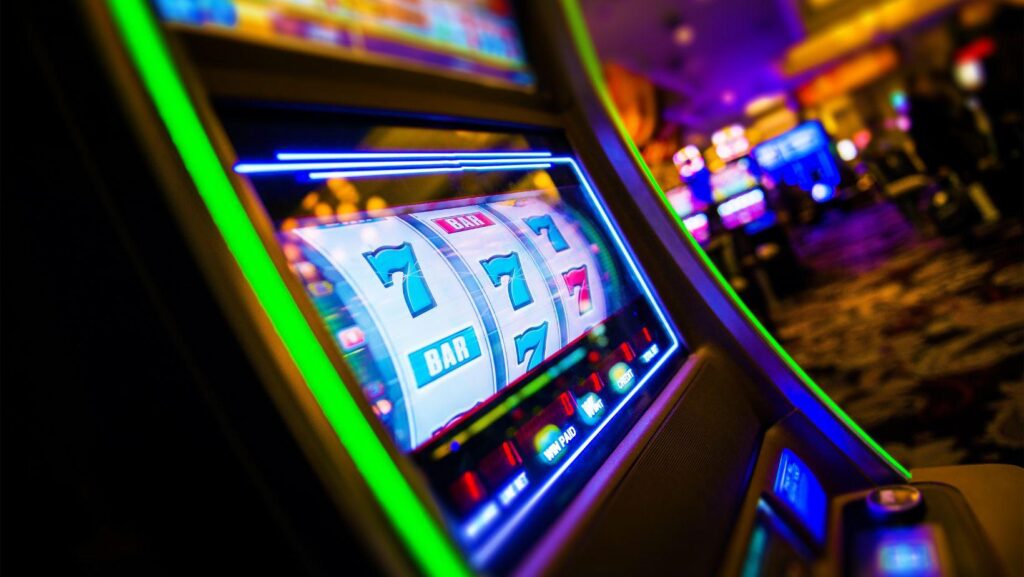
The people building slot games in 2026 are not coming from casino floors. They're coming from studios that made mobile RPGs, match-three puzzlers, and progression-heavy shooters. And it shows. If you know what to look for.
Reward loops are the backbone of both video games and modern slots. In an RPG, you grind mobs to trigger a loot drop. In a slot, you chase a bonus round trigger or a scatter cluster. The underlying psychology is identical: variable-ratio reinforcement, the same mechanism behind Candy Crush keeping you tapping at midnight. For Florida players trying to make smarter decisions about where and how they play, understanding this overlap matters more than any basic bankroll tip. That's why it's worth starting with a vetted list of platforms built to hold up under this level of scrutiny. You can see the full list of Florida-accessible casinos that have actually been stress-tested for payout speed, bonus fairness, and slot variety.
So let's get into the mechanics themselves. Because once you see the borrowing clearly, you'll read volatility labels differently.
Volatility Is Just Difficulty Scaling With a Different Name
Every game designer knows that pacing is everything. Release rewards too fast and the player disengages. Too slow and they quit out of frustration. That tension. How often do you reward the player, and how big is the reward. Is exactly what slot volatility describes.
Low-volatility slots pay out frequently but in small amounts. High-volatility slots can go 80, 100, even 150 spins without a meaningful win, then drop a 500x multiplier. That's not random cruelty. It's deliberate pacing, borrowed almost directly from how Diablo's loot rarity tiers are structured or how ARK: Survival Evolved spaces out its crafting resource drops. The rare blueprint hits harder precisely because you've gone long enough without one.
For a Florida player sitting down with $100, this framing matters. A high-volatility slot like Hacksaw Gaming's Wanted Dead or a Wild isn't broken when it goes cold for 60 spins. It's working as designed. The mistake is treating it like a low-volatility machine and burning through the session expecting regular small returns.
RTP sits underneath all of this. It's the long-run correction. The 96% or 97% figure that tells you the house edge over millions of spins. But in a single session, variance can swing wildly from that figure. A 96% RTP slot can return 40% of your stake in one session and 200% in the next. The RTP is the average of those extremes. Video game designers call this the "drop rate variance." Slot designers just call it volatility. Same thing.
Near-Misses and the Stop Button: Tricks Borrowed From Everywhere
Here's the mechanic that bothers me most, partly because it's so effective.
A near-miss in slots is when two jackpot symbols land on the payline and the third stops one position above or below. You almost hit it. The cognitive response is powerful. The brain reads it as progress, as "getting closer," even though statistically the next spin has exactly the same odds as the one before. Each spin is independent. There's no memory.
Researchers at the University of Waterloo studied this directly. Published in the Journal of Gambling Studies their 2018 work confirmed that near-misses in slot machines create an illusion of control that drives continued play. Players interpreted near-misses as signals to keep spinning, not as evidence of random outcomes (source). Candy Crush uses the same mechanic in its level failures, showing you how close you came to completing the board, which is why the "just one more try" impulse hits so hard on mobile games too.
The stop button on some slots. The ability to manually halt the reels mid-spin. Creates a similar illusion. It feels like skill. It isn't. The outcome is determined the instant you press spin. The visual reel animation is theater. This is something the same research confirmed, and it's a useful thing to carry into any session: pressing stop does nothing except make you feel like you're participating more actively.
Free spins triggers operate differently. These are straightforward probability events. Land three scatter symbols and the bonus fires. But smart slot designers borrow the "almost there" tension by making the third scatter land last, often creeping down the reel slowly. The anticipation is manufactured. The feature was already guaranteed to hit or not hit before the reels started moving.
Bonus Rounds Are Just Second-Screen Minigames
If you've played any mobile RPG in the last five years, you know the second-screen format. The main gameplay loop is the grinding. The real reward lives behind a triggered event. A boss fight, a crafting sequence, a dungeon map. That's where the big drops live.
Slot bonus rounds are structurally identical. The base game is the grind. The bonus round is where the real money moves. Pragmatic Play's Fruit Party, for example, keeps the base game fairly pedestrian. Standard symbols, modest wins. But inside the free spins feature, multipliers stack across multiple positions and a single lucky spin can return 5,000x the stake. The base game exists to get you to that trigger.
Game studios know this creates engagement beyond just the payout potential. Players stay in sessions specifically to trigger the bonus, not necessarily because the base game wins are satisfying. It's the slot equivalent of grinding a dungeon for a specific item drop. The process becomes the experience, not just the outcome.
For Florida players, the practical implication is straightforward: if you're playing a bonus-heavy slot, your effective session budget needs to account for dry spells in the base game. A 150-spin session where the bonus fires once late is a completely normal outcome. That's not the game misbehaving. That's the design.
The Florida Context: Where This Knowledge Actually Applies
Florida's gambling landscape in 2026 is still unsettled. The state passed HB 1017 in 2025, tightening enforcement around illegal slot machines. Specifically the grey-market electronic games that have proliferated in convenience stores and truck stops across the state (Florida House of Representatives). These aren't licensed slots. Their RTP figures are unverifiable, their ownership is opaque, and the near-miss manipulation on these machines operates with no regulatory oversight whatsoever.
Licensed online platforms operating under recognized gaming boards publish their RTPs. The Anjouan Gaming Board, for example. Which licenses Ignition, one of the more established Florida-accessible operators. Requires certified RNG audits. That's the difference between a machine designed to a published house edge and a machine designed to extract maximum spend without accountability.
The mechanics described in this piece apply to both. But knowing that near-miss programming exists, and knowing what volatility actually means, is far more useful on a platform where the underlying math is independently verified than on a grey-market device where you have no idea what's running under the hood.
How Audio Design Reinforces Every One of These Mechanics
This site has covered how audio design adds value to slot games in depth, and the connection to video game mechanics runs directly through sound.
The ascending tone that plays when three scatter symbols approach a trigger. The distinct sound of a near-miss versus a full blank. The celebratory audio that fires on any win, even a 0.5x return that's actually a net loss on the spin. These aren't incidental production choices. They're borrowed directly from mobile game design, where every positive micro-event gets its own sonic reward regardless of whether the player actually gained anything meaningful.
NetEnt and Play'n GO both employ dedicated audio teams whose job description overlaps significantly with mobile game audio design. The industry crossover is real and documented. When you mute a slot game, sessions feel shorter. That's not a coincidence.
FAQ
Do high-RTP slots actually pay out more often? Not necessarily more often. More over time. A 97% RTP slot returns $97 per $100 wagered across millions of spins. In a single session, you might return $200 or $30. RTP describes the long-run average, not individual session outcomes. Volatility tells you more about what a single session will feel like.
Why do slot bonus rounds always seem to happen to other people? They feel that way because the base game is long and the trigger rate is low by design. A bonus that fires every 200 spins on average might not appear once in a 150-spin session. That's not bad luck. It's normal distribution. The expected value is built into the RTP across those eventual trigger events.
Is it legal to play online slots in Florida in 2026? Florida hasn't legalized online casino gambling at the state level. However, many Florida players access offshore-licensed platforms that operate outside Florida's jurisdiction. The legal risk sits with operators, not individual players. Grey-market slot machines physically located in Florida are a separate enforcement issue under HB 1017.
Does pressing the stop button on a slot machine affect the outcome? No. The outcome is determined by the RNG the instant you press spin. The visual reel animation is a display feature only. Pressing stop changes how long you watch the animation, nothing else. Any perceived skill in timing the stop is an illusion.
What does 'max win cap' mean and why does it matter? Most slots cap their maximum win per spin. Commonly at 5,000x or 10,000x your stake. A game advertising a 20,000x potential win that's capped at 5,000x in practice is common. Always check the game rules tab before playing. The cap affects the true upside on high-volatility bets significantly.
Know the Design, Play Smarter
Slot machines didn't stop evolving when digital took over from physical reels. They recruited from the same talent pool building the games already on your phone and console. The near-miss engineering, the bonus-round anticipation loop, the audio layering. None of it is accidental, and none of it is unique to gambling. It's design, borrowed from wherever it works best.
Florida players navigating an unregulated landscape have more reason than most to understand these mechanics. Knowing what high volatility actually means in a session, recognizing near-miss programming for what it is, and choosing platforms with verifiable RTP data puts you in a better position than 90% of players sitting down cold.
Gambling involves risk. Play responsibly and only wager what you can afford to lose. If gambling is becoming a problem, visit BeGambleAware.org or call 1-800-GAMBLER.
About The Author