Fyrconthius Lazenquill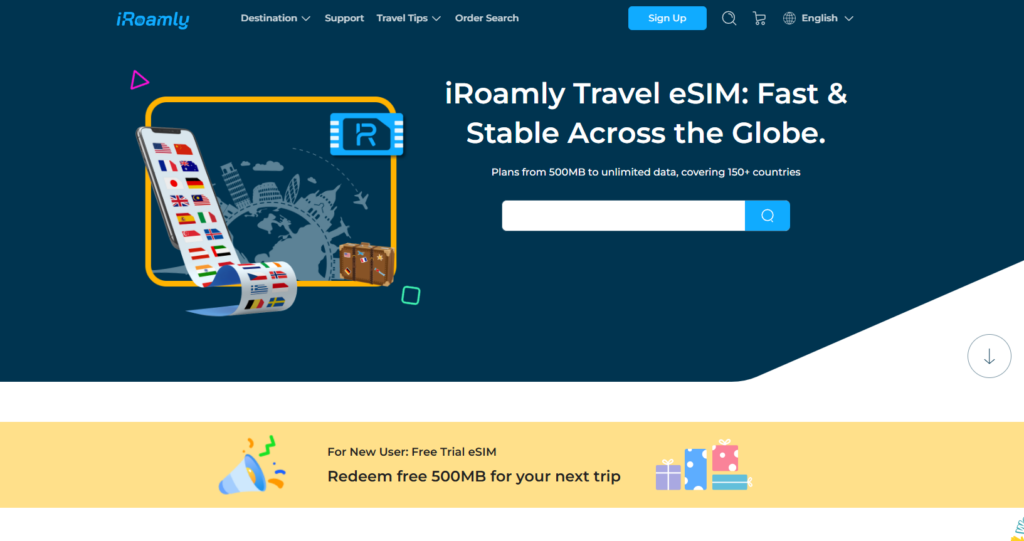
There is a quiet shift happening in the way frequent travelers think about connectivity. For years, the ritual was predictable: land at your destination, hunt down a local SIM kiosk, wait in line, swap out your physical card, and hope the data package you just bought actually lasts the week. But that workflow is increasingly feeling like a relic from a different era. The rise of embedded SIM technology has introduced a simpler alternative—one that lets you skip the airport convenience stores and the frantic searching for a working pin code. Iroamly esim represents one of the more polished executions of this idea, and after spending time with its service across multiple trips, it is worth examining what actually works, what does not, and where the trade-offs live.
The Core Premise: Data Without the Physical Card
The fundamental value proposition of iRoamly is straightforward: it resells prepaid eSIM data plans sourced from local telecom operators around the world. Rather than operating its own towers, the company partners with over 50 telecom providers globally to secure coverage in more than 100 countries. This is not a new model—other players like Airalo and Holafly operate in the same space—but the execution details matter more than the broad strokes.
What sets the service apart, at least on paper, is the flexibility of its plan structure. iRoamly offers three distinct plan types: daily allowances, total data caps, and unlimited packages. This means a traveler heading to Europe for a week can choose a daily plan that resets each morning, while someone on a longer journey through Southeast Asia might prefer a total data bucket that does not expire until the balance runs dry. The unlimited option, meanwhile, appeals to heavy users who do not want to think about consumption at all. In practice, the availability of these three parallel structures makes the service more adaptable than competitors that restrict users to only one or two plan types.
Coverage is another pillar of the offering. The service claims availability in more than 150 countries, with a particular emphasis on strong signal performance in 99% of those locations. For new users, there is also a free 500MB trial eSIM available in over 100 destinations—a low-risk way to test the installation process and network quality before committing to a paid plan. The trial is limited to first-time users and lasts one day, but it provides a genuine opportunity to evaluate the service without spending money upfront.
The Installation Workflow: Three Steps, Minimal Friction
The user experience of any eSIM service lives or dies on the installation process. If the setup is confusing or error-prone, the entire value proposition collapses. iRoamly has structured its onboarding around a three-step flow that is consistent across both the website and the mobile app.
Step One: Selecting the Right Plan
Matching Data Needs to Travel Style
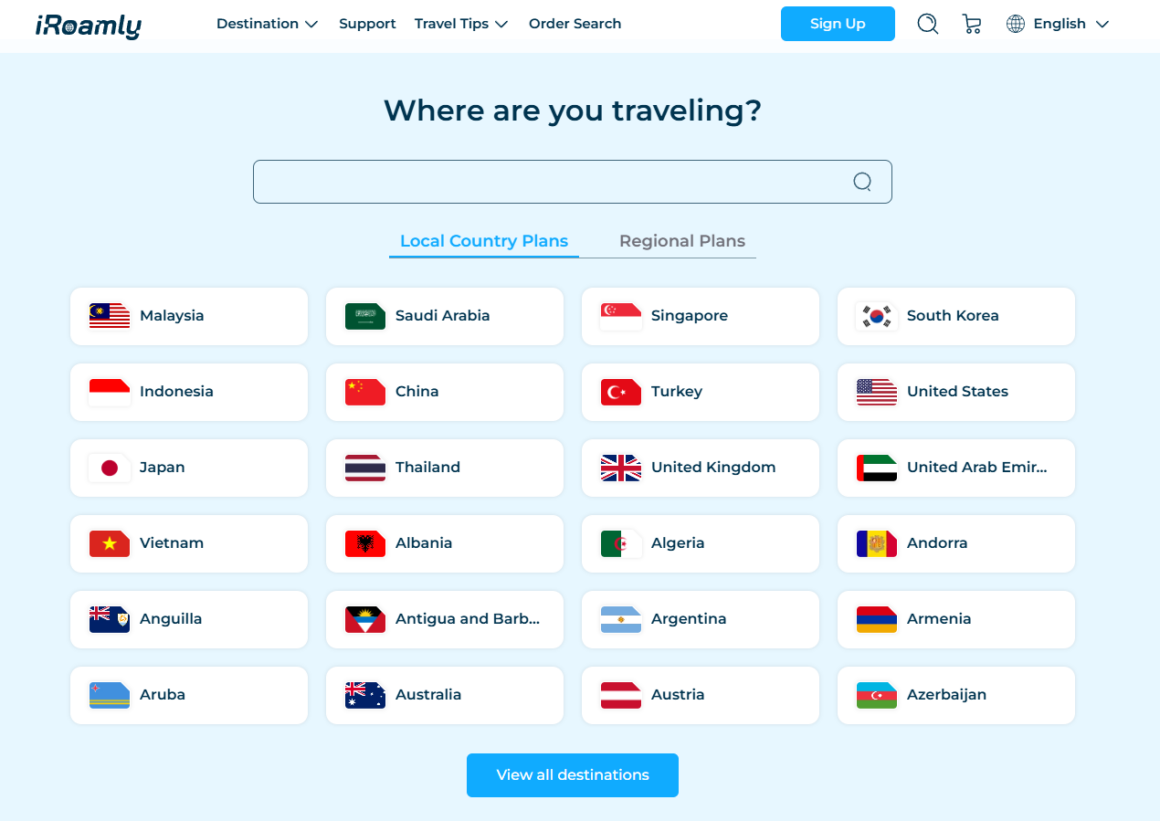
The first step involves choosing a package that aligns with your destination and expected usage. The website presents plans organized by region—single-country options, regional bundles, and global packages covering upwards of 147 countries. Pricing varies considerably depending on the region and data allowance, with some plans starting as low as a few dollars for short-term, low-usage scenarios.
One useful feature here is the data calculator, which lets you estimate consumption based on typical activities like YouTube streaming, social media browsing, map navigation, and video calls. This is a practical addition because data usage estimates are notoriously difficult to gauge without some reference point. The calculator does not replace real-world judgment, but it provides a reasonable starting benchmark.
Step Two: Installing the eSIM Before Departure
The QR Code and Email Workflow
After purchase, the eSIM arrives as a QR code sent to your email address. The installation itself is device-dependent but follows the standard eSIM provisioning flow: you open your phone’s cellular settings, select “Add Cellular Plan,” and scan the QR code with your camera. The entire process takes roughly a minute on both iOS and Android devices, assuming your phone is eSIM-compatible and network-unlocked.
The company recommends installing the eSIM one to two days before departure, using a stable Wi-Fi connection to avoid any interruptions during the setup. This is sensible advice—installing an eSIM requires an active internet connection, and doing it in a hotel room or at home is far more reliable than attempting it in an airport terminal with spotty public Wi-Fi.
Step Three: Activating Upon Arrival
Switching On at the Destination
The final step is the actual activation. Once you land at your destination, you enable the eSIM profile in your device settings, and the data connection becomes active. There is no need to remove your primary physical SIM, which means you can keep your home number active for calls and texts while using the eSIM exclusively for data. This dual-SIM capability is one of the genuine conveniences of the technology—you are not forced to choose between staying reachable on your regular number and having affordable data abroad.
A Practical Comparison: How the Service Stacks Up
To ground the discussion in something more concrete than feature lists, here is a comparison of how iRoamly measures against the broader eSIM landscape across several dimensions that actually affect the travel experience.
|
Aspect |
iRoamly |
Typical eSIM Alternatives |
|
Plan Variety |
Three types: daily, total data, and unlimited |
Often limited to one or two plan structures |
|
Free Trial |
500MB free eSIM in 100+ countries for new users |
Limited or no trial offerings |
|
Hotspot Sharing |
Unlimited sharing permitted |
Often restricted or throttled |
|
Speed Policy |
No sudden throttling on unlimited plans |
Speed reductions after daily caps are common |
|
Setup Complexity |
Three-step QR code installation |
Similar QR-based flow, but varies by provider |
|
Coverage Breadth |
150+ countries, 50+ carrier partners |
Varies widely; some providers focus on specific regions |
The table highlights a few genuine differentiators. The combination of three plan types, a free trial, and unrestricted hotspot sharing is not universal in this market. Many competitors restrict tethering or impose speed reductions after a certain daily threshold, which can be a problem if you need to share your connection with a laptop or traveling companion.
The Referral Ecosystem: Incentives for Word-of-Mouth
iRoamly has built a referral program that rewards both the referrer and the new user. When an existing customer shares their unique referral code and a friend makes a purchase, the friend receives a discount on their first order, and the referrer earns iMoney that can be applied toward future data purchases. The exact reward amounts appear to vary by campaign—some iterations offer $3 in savings and $3 in iMoney, while others structure it as $2 discounts with $2 in rewards.
There is also an influencer partnership component, where promoters can earn a percentage of the order value from customers who use their referral links. This dual approach—direct consumer referrals plus creator partnerships—suggests a deliberate strategy to grow through social proof rather than paid advertising alone.
Scenarios Where the Service Excels
From a practical user perspective, the service appears best suited for several distinct travel profiles.
Short-term leisure travelers benefit from the daily plans, which provide a predictable data allowance that resets each day. This removes the anxiety of burning through a fixed bucket too quickly and leaves you stranded without connectivity halfway through the trip.
Digital nomads and long-term travelers may prefer the total data or unlimited plans, particularly when moving across multiple countries within a single region. The ability to keep the same eSIM active across borders without purchasing new packages at each destination reduces both cost and administrative overhead.
Families or small groups can take advantage of the unlimited hotspot sharing. One paid eSIM can provide connectivity for multiple devices, which is significantly more economical than purchasing individual plans for every traveler.
First-time eSIM users have a genuine on-ramp through the free 500MB trial. Testing the installation flow and network performance before committing any money removes a significant barrier to adoption.
Realistic Limitations and Considerations
No service is without its constraints, and iRoamly is no exception. The company itself acknowledges that it does not guarantee uninterrupted service, timely delivery, or a fault-free experience. This is standard language for any telecom reseller, but it is worth keeping in mind: the service depends on partner networks, and those networks have their own reliability characteristics that vary by country and region.
Device compatibility is another factor. The customer is responsible for ensuring their phone is eSIM-compatible and network-unlocked. The compatibility list provided at checkout is not exhaustive, which means some newer devices may work even if they are not explicitly listed, but there is also a chance that an older or carrier-locked phone will not function at all. Checking compatibility before purchase is essential.
The free trial, while generous, is limited to 500MB for one day and is restricted to new users. It is enough to test the basics but not sufficient for any serious data usage. Think of it as a proof-of-concept rather than a meaningful data allowance.
Finally, the quality of the experience depends heavily on the quality of the local partner network in your specific destination. In countries where iRoamly has strong carrier relationships, the service performs well; in regions with fewer partners, the experience may be less consistent. The company’s claim of strong signal in 99% of covered countries is encouraging, but real-world results will vary.
What Real Users Are Saying
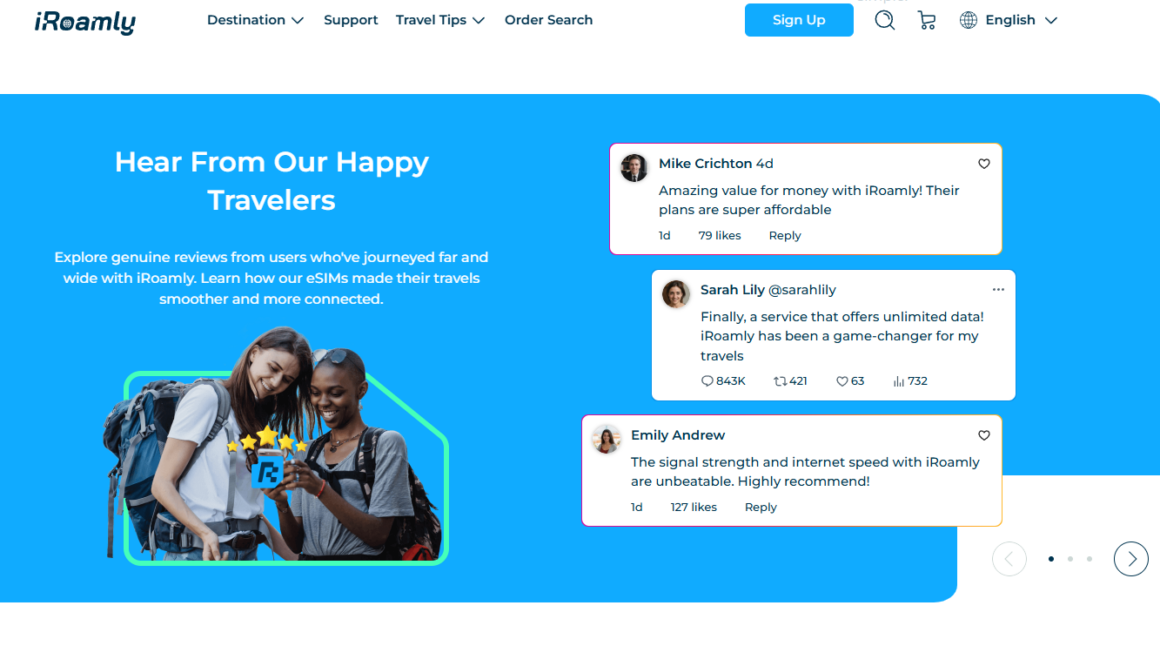
Looking at user feedback provides a useful counterpoint to the marketing materials. Several recurring themes emerge from the reviews available on the site. Multiple users comment on the value proposition, noting that the data allowances are generous for the price and that the service has become a repeat purchase. The unlimited plan in particular receives positive mentions from travelers who appreciate not having to monitor their usage constantly.
Signal stability is another frequently cited strength, with users describing consistent speeds and reliable video streaming. The variety of plan lengths—including 30-day options—appeals to travelers on extended trips. Customer support also receives favorable comments, with several users noting that the team responded quickly and answered questions thoroughly before purchase.
These reviews are not systematically verified, and they represent a self-selected group of users who chose to leave feedback. But the consistency of the themes—value, reliability, plan variety, and responsive support—suggests that the service delivers on its core promises for a meaningful portion of its user base.
The Verdict From a Practical Angle
After walking through the installation flow, examining the plan structures, and considering the real-world feedback, the service emerges as a competent player in a crowded field. It does not reinvent the eSIM category, but it refines several aspects that matter: plan flexibility, the inclusion of a free trial, unrestricted hotspot sharing, and a straightforward three-step setup.
The most compelling use case is probably the traveler who values options. If you want the freedom to choose between daily, total, or unlimited data; if you appreciate having a free trial to test the waters; and if you plan to share your connection with other devices, then turkey esim and the broader service lineup offer a credible solution. The referral program adds a mild incentive to spread the word, and the coverage footprint covers most major travel destinations.
That said, the service is not a magic bullet. It works best when you have a compatible device, a clear understanding of your data needs, and realistic expectations about network performance in your specific destination. The underlying technology is solid, but it is still a reseller model, which means the experience is only as good as the local carrier partnerships.
For the traveler who wants to land, turn on their phone, and start navigating without hunting for a SIM card, the service delivers on that promise. The installation is quick, the plans are reasonably priced, and the flexibility across plan types accommodates a wide range of travel styles. It is not the cheapest option in every market, and it is not the most feature-rich, but it strikes a practical balance that will work for a broad cross-section of travelers.
About The Author